.svg)



%20(1).svg)
%20(2).svg)
.png?width=480&height=420&name=Img%20(1).png)
%20(3).svg)
%20(4).svg)

%20(5).svg)


 View all states

6 mins

In this blog
Property ownership is about years of savings and often well thought in alignment with long term financial goals, more so for older homeowners. With a surge in retirement expenses, most people look for ways to utilize their home equity to manage spending without selling the property. This is where reverse mortgages help.
What are the 3 types of reverse mortgages?
The 3 main types are the home equity conversion mortgage, the proprietary reverse mortgage, and the single purpose reverse mortgage. Every type of reverse mortgage serves different financial needs and has its unique eligibility guidelines defined along with the costs, and benefits. This reverse mortgage enables homeowners to access without making monthly payments towards loan balance while still staying in the same property as their primary residence.

How Reverse Mortgages Work
A reverse mortgage loan enables senior homeowners who are 62 and above to borrow money against their home value. Here the lender provides funds by means of multiple payment options instead of the borrower paying the lender monthly.
Borrowers may receive:
- A lump sum
- Monthly cash advances
- A line of credit
- A combination of payment structures
The available amount depends on different factors like:
- Age of the borrower
- Current interest rates
- Existing mortgage debt
- Value of property
- What equity has been built
The loan typically is due when the homeowner sells off the property, leaves the home permanently or moves into an assisted living facility.
.png?width=800&height=600&name=2.Home%20Equity%20Conversion%20Mortgage%20(HECM).png)
Home Equity Conversion Mortgage (HECM)
The home equity conversion mortgage or the equity conversion mortgage HECM, is the most common type of reverse mortgage in the United States. It is backed by the Federal Housing Administration FHA and is regulated through Housing and Urban Development guidelines.
Benefits of HECM Loans
HECM loans are popular as they provide flexible payment options that include:
- Monthly pay-outs
- A home equity line
- A one-time lump sum
- Combined disbursement structures
The lenders are protected in these type of loans
incise the property value falls given they are backed by the federal government. This type of loan is suitable for homeowners that have significant equity and seek retirement cash flow.
Costs and Responsibilities
Even if borrowers don’t make regular mortgage payments, they must still pay the:
- Property taxes
- Homeowner's insurance
- Home maintenance expenses
- Mortgage insurance
- Origination fees
- Servicing fees
- Other closing costs
The total annual loan cost fluctuates depending on the size of loan, structure of playout and the market conditions.
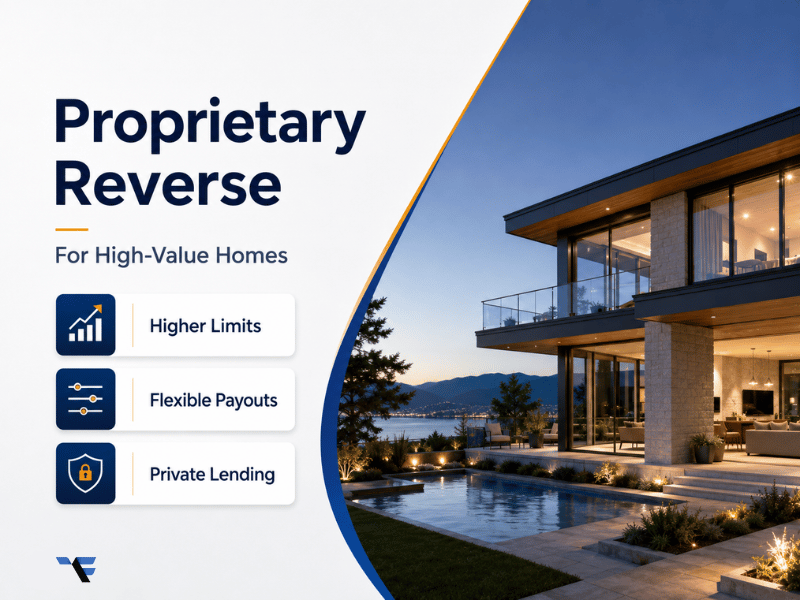
Proprietary Reverse Mortgage for High-Value Homes
Private lenders provide the proprietary reverse mortgage instead of the government agencies. This type of loan, also known as the jumbo reverse mortgages is meant for homeowners with a high value property.
Why Borrowers Choose Proprietary Loans
Proprietary loans are preferred often by few borrowers given they do not have funding limits like the FHA-backed lending limits and can be used for purchasing luxury homes.
These type of loans come with following advantages:
- Better borrowing limits
- Higher loan proceeds
- Adaptable playout structures
- Expanded line of credit access
The qualification rules, interest rate and loan terms are subjective to lenders as they are not backed by federal institutions.
Borrowers must carefully assess:
- Current interest rates
- Fee structures
- Impact on remaining equity
- Long-term repayment expectations
Single Purpose Reverse Mortgage Explained
Single Purpose Reverse Mortgage is the third type of reverse mortgage that are offered by:
- State and local governments
- Housing agencies
- Certain non-profit organizations
How Single Purpose Loans Work
Single Purpose Revere Loans can be used only for certain expenses like:
- Home repairs
- Medical bills
- Accessibility upgrades
- Paying overdue property taxes
This type of loan may provide relatively less flexibility, but can enable homeowners to enhance their financial security while still being able to manage the immediate housing expenses.
Comparing the Types of Reverse Mortgages
Let us see in short the different types of reverse mortgage programs to enable borrowers to choose the right option.
| Type of Reverse Mortgage | Key Features | Best Suited For |
| Home Equity Conversion Mortgage (HECM) | Backed by the Federal Housing Administration, federally insured, flexible payment structures, widely available | Homeowners seeking flexible and government-backed reverse mortgage options |
| Proprietary Reverse Mortgage | Offered by private institutions, higher borrowing limits, designed for high-value homes | Borrowers with luxury or high-value properties needing larger loan proceeds |
| Single Purpose Reverse Mortgage | Restricted-use loan, lower costs, offered through local agencies and non-profits | Homeowners needing funds for specific expenses like home repairs or property taxes |
Every mortgage type helps with different financial goals and borrowers must compare the loan options to make an informed decision.
Important Things to Consider Before Applying
Most reverse mortgages eliminate the burden of monthly mortgage payments but borrowers may still need to carry financial responsibilities. At the onset of loan process, homeowners must assess
- Existing debt
- Long term financial goals post retirement
- Expenses incurred in medical needs
- Future housing plans
- Qualification for defined eligibility criteria when it comes to government benefits
- Current loan balance
Borrowers who apply for Federal Housing Association backed reverse mortgages must undergo a counselling session. Borrowers can better understand repayment conditions, fees, and how reverse mortgages may affect inheritance planning or supplemental security income eligibility. This helps them make informed financial decisions.
Understanding what the 3 types of reverse mortgages are can help homeowners make informed retirement financing decisions. Whether exploring a home equity conversion mortgage, reviewing a proprietary reverse mortgage, or considering a single purpose reverse mortgage, each option provides different advantages and responsibilities. These programs can improve retirement flexibility and provide access to accumulated home equity without immediately selling the home. However, borrowers should carefully review fees, repayment conditions, and long-term financial goals before choosing a solution. Working with experienced professionals such as Truss Financial Group can help homeowners better understand available reverse mortgage options and select financing aligned with their needs.
Frequently Asked Questions
1. What are the 3 types of reverse mortgages?
The three main types are the Home Equity Conversion Mortgage (HECM), proprietary reverse mortgage, and single purpose reverse mortgage.
2. Which reverse mortgage is federally insured?
HECM loans are federally insured through the Federal Housing Administration.
3. Do borrowers still own their homes?
Yes. Homeowners retain ownership as long as they continue meeting loan obligations.
4. Can reverse mortgage funds be used for anything?
HECM and proprietary loans are flexible, while single purpose loans restrict how funds are used.
5. Do reverse mortgages affect inheritance?
Yes. Since the loan balance grows over time, the remaining equity passed to heirs may decrease.

.svg)

Discuss your unique requirements
Get direct answers and a roadmap for your future.
.png?width=202&height=202&name=image%20588255187%20(1).png)








.svg)

.svg)
.svg)