.svg)



%20(1).svg)
%20(2).svg)
.png?width=480&height=420&name=Img%20(1).png)
%20(3).svg)
%20(4).svg)

%20(5).svg)


 View all states
How Much Does It Cost to Refinance a Mortgage?

5 mins
In this blog
Refinancing is a mode of securing a loan that enables homeowners to get funding at a relatively lower interest rate which reduces monthly payment and allows homebuyers to access home equity through a cash out refinance. However, when replacing the current mortgage with a new loan, it is essential to understand how much it costs to refinance a mortgage.
The total cost to refinance depends on the loan amount, lender fees, credit profile, and the type of mortgage refinance one goes for. At the time of refinancing one’s mortgage, borrowers must also consider the upfront expenses that come during the refinance process.
Whether one desires to move from an adjustable rate mortgage to a fixed rate mortgage, reduce mortgage payments, consolidate debt, it is essential to understand refinancing costs to make an informed decision.
What Are Mortgage Refinance Closing Costs?
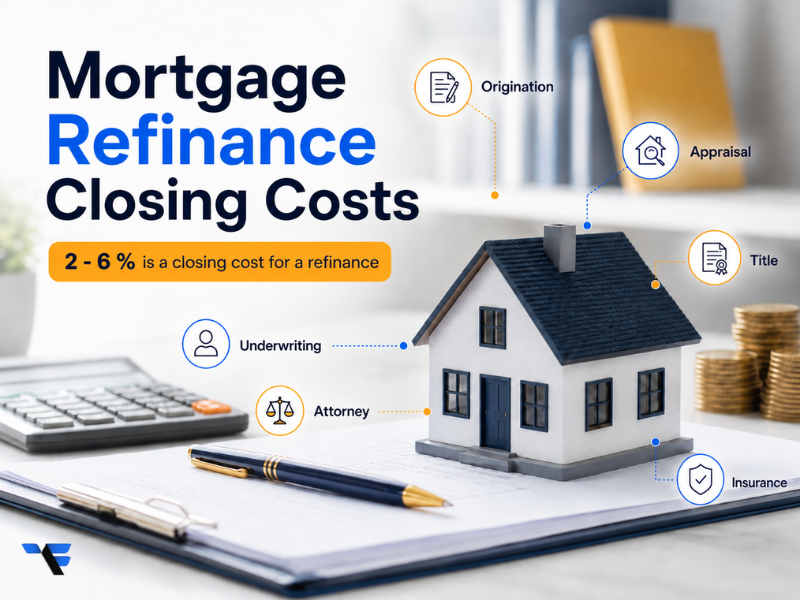
Homeowners typically pay close to 2% and 6% of the total mortgage loan amount in refinance closing costs. For example, refinancing a $300,000 home loan could cost anywhere between $6,000 and $18,000.
The closing costs typically include:
- Loan origination fees
- Application fee
- Underwriting fees
- Appraisal fee
- Attorney fees
- Credit report fees
- Title insurance
- Charges from the title insurance company
- Pre-paid interest
- Administrative and recording charges
- Mortgage insurance premiums
Few lenders also charge discount points or mortgage points to enable borrowers to secure a lower mortgage rate. While these upfront costs may seem relatively high, borrowers still prefer to go for refinance given the lower long-term interest payment obligations and reduced monthly mortgage payments that can help offset those expenses.
Why Does the Cost to Refinance Vary?
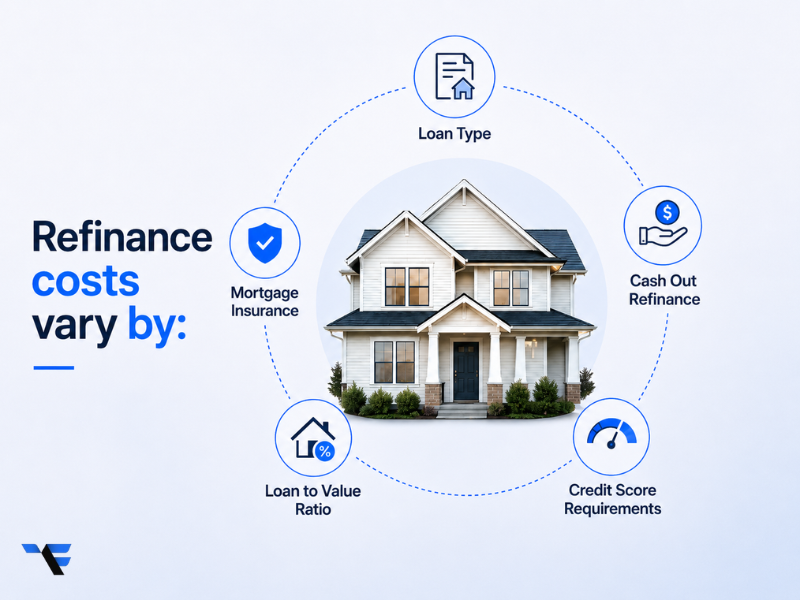
The overall cost to refinance depends on following factors.
Loan Type
Every loan program has a unique fees and approval requirements. With conventional loans, lenders assess credit score, loan to value ratio, and current loan balance carefully. Borrowers who have gone for VA loans may choose to avoid certain mortgage insurance expenses as it reduces refinance closing costs.
Cash Out Refinance
A cash out refinance is ideal for homeowners who wish to withdraw funds against available home equity. Most borrowers prefer this option and use the funds to renovate a property or pay off debt. With the new loan balance, the refining cost may increase or decrease.
Credit Score Requirements
Credit score plays an important role when planning t go for refinancing. Higher the score, better the qualification for loans with lower interest rate and reduced origination fees.
Loan to Value Ratio
The loan to value percentage evaluates the borrower’s remaining loan balance with the property value. Lower the ratio, better the approval chances and loan terms.
Mortgage Insurance
Homeowners with lower equity may need to go for private mortgage insurance PMI, which may increase monthly expenses. Few borrowers may also continue paying mortgage insurance premiums until they build sufficient equity.
Is a No Closing Cost Refinance Worth It?
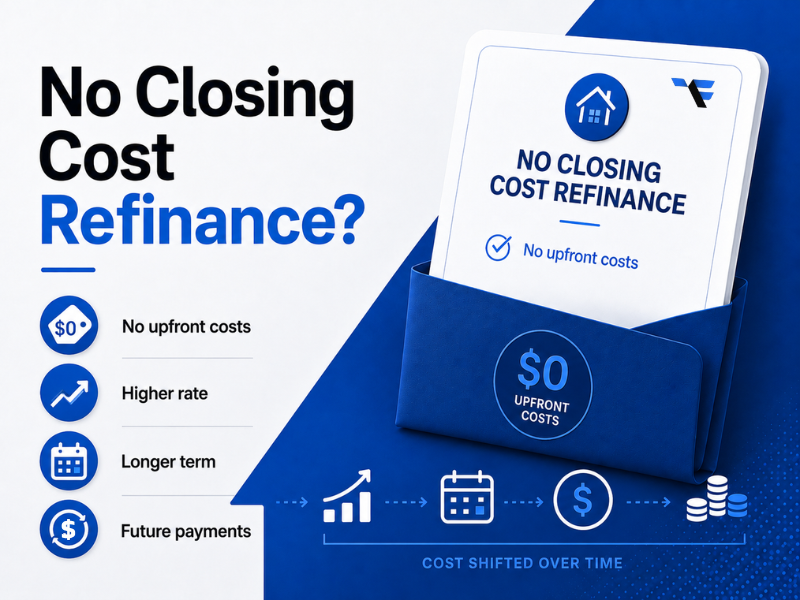
A no closing cost refinance may entice homebuyers given it has no upfront costs. However, the costs are typically included elsewhere like:
- Increased interest rate
- Additional amount in the monthly repayment of the new loan
- Extension of loan term
- Spread of costs across future monthly payments
While this option may be helpful for borrowers who can’t afford upfront expenses, it can increase long-term costs. When planning to go for this option, make sure to compare expected monthly savings with the total amount you may pay interest over time.
When Does Refinancing Make Financial Sense?
Refinancing a mortgage only makes sense when the savings exceed the refinancing costs. This is where the breakeven point becomes important.
The breakeven point measures how long it takes for lower monthly payments to recover the upfront costs.
Example:
- Refinance closing costs: $6,000
- Monthly savings: $250
- Breakeven point: 24 months
If you plan to stay in the property longer than the breakeven point, refinancing your mortgage may help save money in the long run.
Many lenders and platforms also provide financial calculators that help borrowers estimate savings and compare loan options.
So what does it cost to refinance a mortgage?
It is important for homebuyers to know how much does it cost to refinance a mortgage as it isn’t just about reviewing lender estimates. Whether it is the origination fees and appraisal charges to mortgage insurance and title insurance, every type of refinancing has certain costs associated with it.
Choosing the right type of refinance strategy totally depends on one’s financial goals, current loan, and long-term plans. Few homeowners look to refinance to get loans at lower rate of interests, whereas some others aim to reduce their monthly payments or accessing home equity.
When considering refinancing, it is recommended to consult reputed financial advisors like Truss Financial Group who can evaluate the borrower’s financial stability, present debts, income and long term financial goals and guide on the right refinance solution that best aligns with their financial priorities as well as costs effectively.
Frequently Asked Questions
1. How much does it cost to refinance a mortgage?
Most homeowners typically pay between 2% and 6% of the total mortgage loan amount in refinance closing costs.
2. Can refinance closing costs be added to the loan?
Yes. Some lenders allow borrowers to include closing costs within the new loan balance, though this may increase long-term interest payment obligations.
3. Does refinancing lower monthly payments?
Refinancing may reduce your monthly payment if you secure a lower interest rate or extend the loan term.
4. What credit score is needed for refinancing?
Credit score requirements vary by lender, but higher scores generally qualify for better mortgage refinance terms.
5. Is refinancing worth it for short-term homeowners?
If you plan to move soon, refinancing may not make financial sense because you may not recover the upfront costs before selling the property.

.svg)

Discuss your unique requirements
Get direct answers and a roadmap for your future.
.png?width=202&height=202&name=image%20588255187%20(1).png)





.png?width=389&height=221&name=Blog%20covers%20(3).png)


.svg)

.svg)
.svg)