.svg)



%20(1).svg)
%20(2).svg)
.png?width=480&height=420&name=Img%20(1).png)
%20(3).svg)
%20(4).svg)

%20(5).svg)


 View all states
HELOC Appraisal Cost vs No-Appraisal HELOC

21 mins
.jpg)
In this blog
Understanding how much a HELOC really costs starts with one overlooked line item: the appraisal. Whether you pay for a full in-person home appraisal or qualify for a no-appraisal HELOC using digital valuations, that choice affects your closing costs, credit limit, and how quickly you can access funds.
A home equity line of credit is not priced like a personal loan. It is priced based on your home’s current market value, your existing mortgage balance, and how accurately a lender can assess your property. That is why appraisal methods, appraisal fees, and automated valuation models matter just as much as interest rates.
Introduction to Home Equity Lines of Credit
A Home Equity Line of Credit (HELOC) is a revolving equity line of credit secured by your home. Instead of receiving one lump-sum loan, you get access to a credit line that you can draw from, repay, and reuse, similar to a credit card backed by your home’s value.
The amount you can borrow depends on:
- Your home’s market value
- Your current mortgage balance
- Your available equity
- Your combined loan-to-value ratio (CLTV)
Most HELOC lenders allow you to borrow up to 80%–85% of your home’s value minus what you owe on your primary mortgage. The appraisal process is how lenders determine those numbers.
HELOCs are commonly used for debt consolidation, home improvements, and other large expenses where borrowers want flexible access to funds and the ability to pay interest only on what they use.

What a HELOC Is and How It Works
A HELOC opens a line of credit tied directly to your home equity. During the draw period, you can:
- Access funds when needed
- Repay part or all of what you borrow
- Reuse the credit line as it becomes available
You only pay interest on the portion of the credit line you use, not the full credit limit. This makes HELOCs more flexible than fixed-rate loans and useful for ongoing expenses, renovations, or consolidating higher-interest debt.
Because a HELOC is secured by your home, lenders must determine the property valuation before approving the loan amount. That valuation is where appraisal costs enter the picture.

HELOC vs Home Equity Loan
A home equity loan and a HELOC both use your home’s equity as collateral, but they work differently.
A home equity loan gives you a single lump sum with fixed monthly payments. A HELOC gives you a revolving credit line with variable monthly payments based on how much you draw.
From a cost standpoint:
- Home equity loans usually require a full appraisal
- HELOCs may qualify for no-appraisal financing through digital valuations
This makes HELOCs more flexible and, in many cases, less expensive to open, especially for borrowers who qualify for appraisal waivers.
What a HELOC Appraisal Actually Costs?
Most traditional lenders require a home appraisal to calculate your appraised value, available equity, and maximum credit limit. The appraisal fee appears as a separate line item in your HELOC closing costs or must be paid upfront. The cost depends on the appraisal method used.
Full HELOC Appraisal Cost
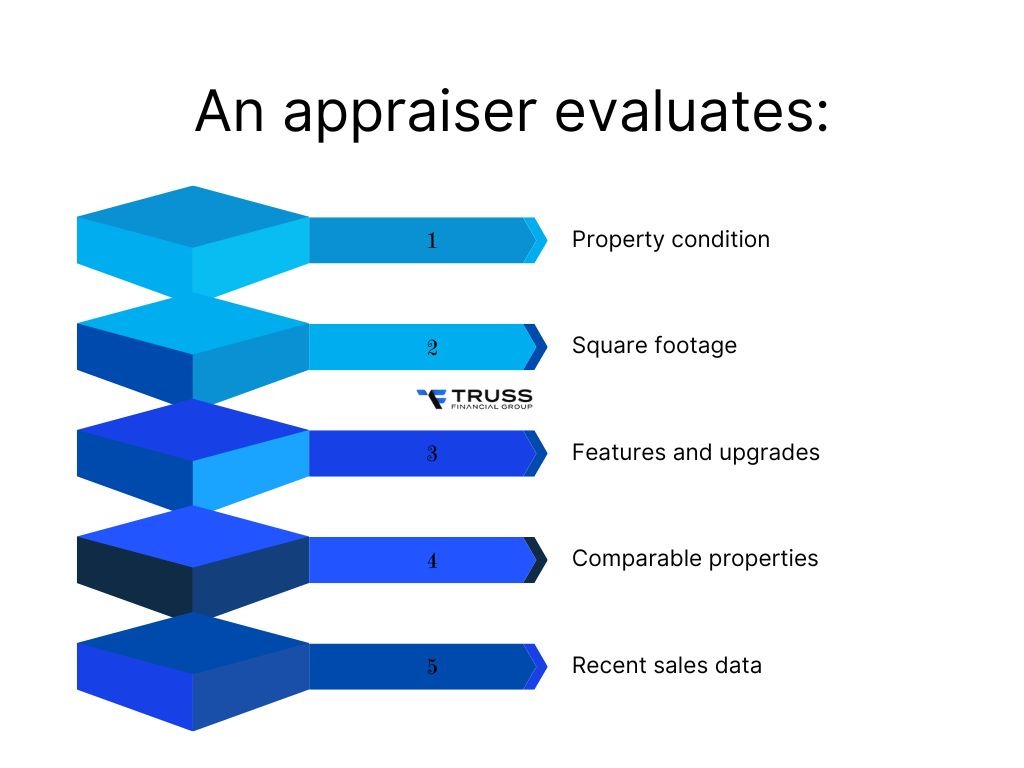
A full appraisal includes a complete physical inspection of the home’s interior and exterior. An appraiser evaluates:
- Property condition
- Square footage
- Features and upgrades
- Comparable properties
- Recent sales data
This is the most accurate way to determine current market value, but it is also the most expensive.
In 2026, a typical full HELOC appraisal costs $350 to $800, depending on:
- Property size
- Property location
- Market conditions
Larger or unique properties may cost more. The appraisal fee is either paid upfront or included in the total closing costs.

Drive-By, Desktop, and Hybrid Appraisal Costs
Not all HELOC appraisals require an in-person interior inspection. A drive-by appraisal only evaluates the exterior of the home and uses public records for interior data. These typically cost $100 to $150. A desktop appraisal or hybrid appraisal combines digital data, recent comparable sales, and limited third-party inspections. These usually cost $100 to $500 and are faster than a full appraisal.
These methods are often used when lenders want a balance between accurate valuation and lower closing costs.
Where Appraisal Fees Show Up in Closing Costs
The appraisal fee is just one part of HELOC closing costs, which may also include:
- Origination fees
- Title insurance
- Recording fees
- Application fees
- Annual or transaction fees
These costs typically total 2%–5% of the loan amount. On a $100,000 HELOC, that can mean $2,000 to $5,000 in upfront charges, with the appraisal alone representing several hundred dollars.
This is why many borrowers look for no-appraisal HELOC options, but skipping the appraisal changes more than just the fee.
How the HELOC Appraisal Process Affects Your Credit Limit
A HELOC is not approved based on how much you want to borrow. It is approved based on how much equity a lender believes exists after evaluating your property.
That belief comes from the appraised value or the digital property valuation. Every dollar of difference in valuation directly changes how much you can access through your equity line of credit.
Appraised Value vs Available Equity
Your available equity is calculated by subtracting your existing mortgage balance from your home’s current market value.
For example:
If your home is valued at $500,000 and you owe $300,000 on your primary mortgage, your raw equity is $200,000. However, lenders do not let you borrow 100% of that amount. They apply a safety margin.
If the appraised value comes in lower, say $470,000 instead of $500,000, your available equity drops by $30,000 instantly, even though nothing about your home has changed.
This is why the appraisal process or automated valuation is so important. It defines the ceiling of your credit limit.

Combined Loan-to-Value (CLTV) and Borrowing Limits
Most HELOC lenders use a combined loan-to-value ratio (CLTV) to determine how much you can borrow.
CLTV = (Current mortgage balance + HELOC balance) ÷ Home’s market value
Most lenders set CLTV limits between 80% and 85%.
Using the earlier example:
- Home value: $500,000
- Mortgage balance: $300,000
- 85% CLTV cap: $425,000
That means the maximum total debt on the home is $425,000, leaving $125,000 available for a HELOC.
If a valuation model or appraisal places the home at $470,000 instead, the 85% CLTV cap drops to $399,500, leaving only $99,500 available, a loss of $25,500 in borrowing power.
Why Lenders Require Property Valuations
Lenders require property valuations because your home is the collateral securing the loan.
The lender needs to know:
- What the home is worth today
- How easily it could be sold
- How risky the loan is
A more accurate valuation allows lenders to offer:
- Higher maximum credit limits
- Better interest rates
- More flexible loan terms
Traditional lenders rely on full appraisals. Modern lenders like Truss Financial Group, which offers no-appraisal HELOCs, rely on digital valuations, AVMs, and recent sales data to reach the same decision faster and at lower cost.
What Happens When You Skip the Appraisal
When a lender skips a traditional appraisal, they do not skip valuation. They change how the valuation is calculated.
Instead of a person walking through the home, the lender relies on automated valuation models, market data, and recent comparable sales to estimate your home’s value. This speeds up approvals and removes appraisal fees, but it also changes how credit limits are set.
How Automated Valuation Models (AVMs) Work
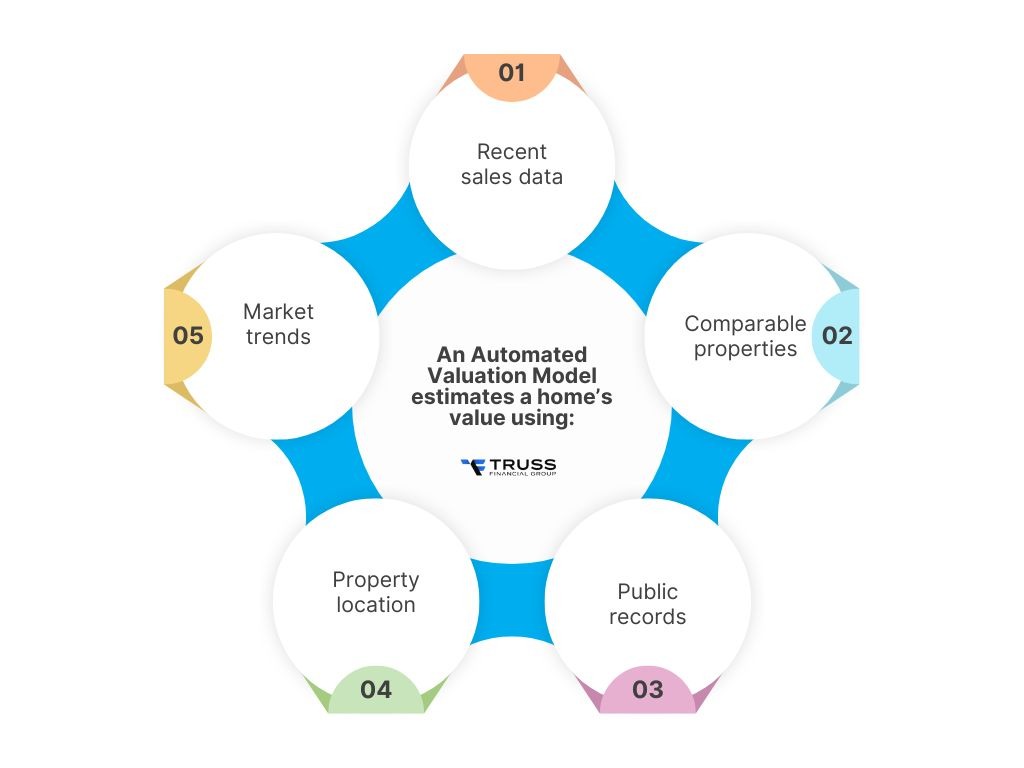
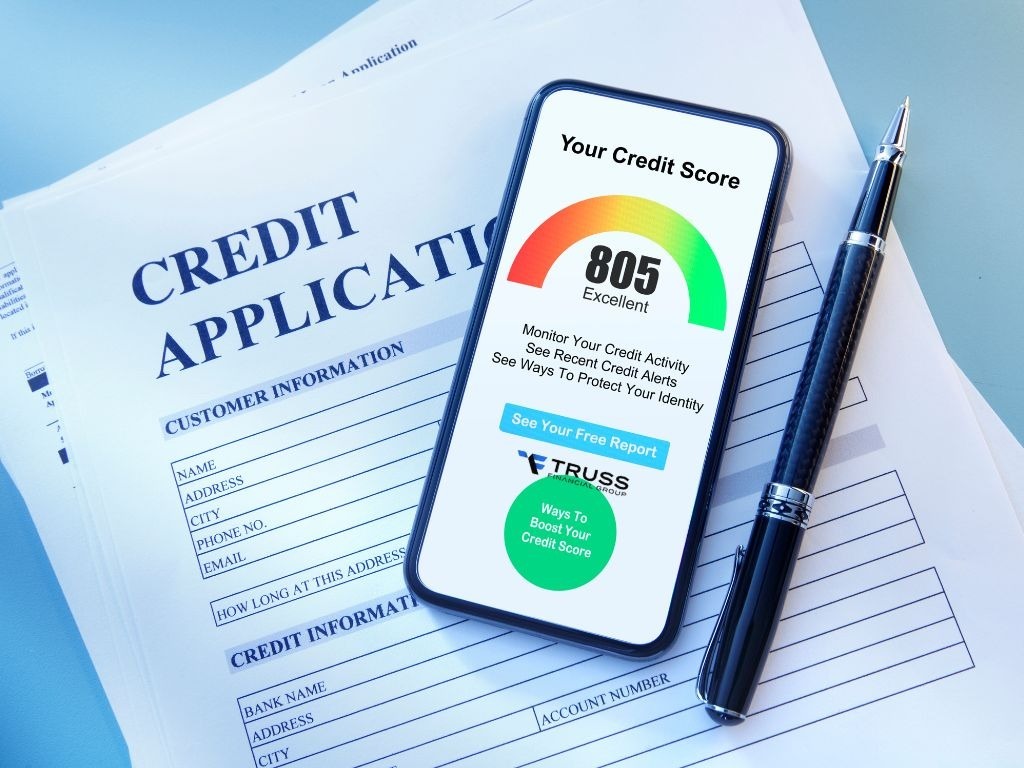
An Automated Valuation Model (AVM) is a digital system that estimates a home’s value using:
- Recent sales data
- Comparable properties
- Public records
- Property location
- Market trends
AVMs are extremely fast and cost little to nothing, which is why they are used for no-appraisal HELOC programs and digital HELOC underwriting.
However, AVMs do not physically inspect the home. They cannot see:
- Interior upgrades
- Custom renovations
- Condition improvements
Because of this, AVMs tend to be conservative when calculating current market value.
How No-Appraisal HELOCs Set Credit Limits
With a no-appraisal HELOC, lenders use AVMs or hybrid digital valuations to determine:
- Home value
- Available equity
- Maximum credit line
To protect against valuation uncertainty, lenders often apply:
- Lower CLTV caps
- More conservative property values
- Tighter credit limits
Even though the appraisal fee is eliminated, the lender may slightly reduce how much you can borrow to compensate for the less detailed valuation.
Why No-Appraisal HELOCs Can Reduce Borrowing Power
No-appraisal financing is built for speed and cost efficiency, not maximum extraction of equity.
Because AVMs can miss:
- Recent renovations
- Custom features
- Unique layouts
The appraised value used by the system may be lower than what a human appraiser would assign. That leads to:
- Lower available equity
- Smaller credit limits
- More conservative loan offers
For borrowers who do not need to max out their home’s equity, this trade-off is often worth it. You save on appraisal fees, avoid delays, and get faster access to funds, which is exactly why lenders like Truss Financial Group offer no-appraisal HELOCs for qualified borrowers.
HELOC Appraisal Cost vs No-Appraisal: The True Tradeoff
Skipping an appraisal can save you hundreds of dollars. But the real cost of a HELOC is not just the appraisal fee, it is how much usable equity you receive for what you pay.
This is where borrowers often get misled. A no-appraisal HELOC looks cheaper upfront, but the valuation method behind it can change your credit limit, interest rate, and origination fees.
Understanding this tradeoff is how you choose the lowest-cost option, not just the lowest advertised fee.
Upfront Fees vs Long-Term Borrowing Power
A traditional HELOC appraisal usually costs $350 to $800 and is paid either upfront or as part of closing costs. A no-appraisal HELOC eliminates or reduces that expense.
However, no-appraisal financing often relies on automated valuation models, which tend to produce more conservative property valuations. As a result, lenders may reduce the maximum credit limit by 5–10% compared to a full in-person appraisal.
That means:
- You might save $500 on appraisal fees
- But lose $10,000–$25,000 in available equity
If you only need a small credit line, that tradeoff makes sense. If you are trying to borrow near your maximum, it may not.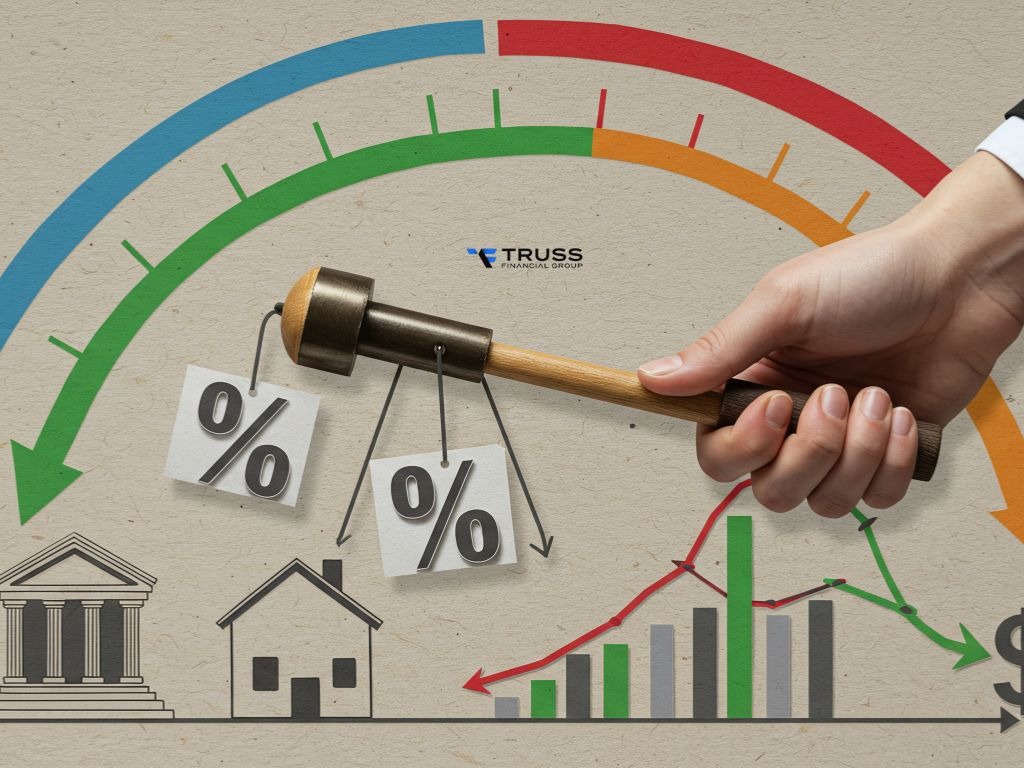
How Interest Rates and Origination Fees Change
When lenders skip the traditional appraisal process, they also take on slightly more valuation risk. Some lenders compensate by:
- Charging higher origination fees
- Applying slightly higher interest rates
- Using stricter credit history and debt-to-income ratio rules
Not every lender does this, but it is common among digital and no-appraisal programs.
This is why borrowers should not compare HELOCs based on appraisal fees alone. The total loan cost depends on:
- Interest rate
- Origination and transaction fees
- Credit limit
- How long you plan to keep the line open
When No-Appraisal Financing Saves Money
No-appraisal HELOCs are usually the better financial choice when:
- You have strong available equity
- You do not need the maximum possible credit line
- You need quick funding
- Your income is non-traditional
Borrowers using a HELOC for debt consolidation, emergency expenses, or short-term liquidity often benefit more from speed and lower upfront costs than from squeezing out every last dollar of equity.
Best No-Appraisal HELOC Options by Borrower Type
Not all no-appraisal HELOCs are built for the same borrower. The best option depends on how you earn income, how you own property, and how you plan to use the funds.
Lenders like Truss Financial Group structure their no-appraisal HELOC programs around these borrower types rather than forcing everyone into one rigid model.
Self-Employed and Bank Statement HELOCs
Self-employed borrowers often struggle with traditional HELOCs because tax returns understate their true income. No-appraisal HELOCs paired with bank statement mortgage or no-tax-return HELOC underwriting allow lenders to focus on:
- Cash flow
- Account deposits
- Available equity
Instead of W-2s and tax forms. When combined with AVM-based property valuations, this structure makes it possible to qualify without the delays and costs of full appraisals.
Senior HELOCs and Fixed-Income Borrowers
Seniors frequently have:
- High home equity
- Low or fixed income
- A need for flexible monthly payments
A Senior HELOC allows lenders to prioritize property value and credit history over income documentation. No-appraisal valuation models work well in this scenario because the equity position is often strong and the credit line does not need to be maximized.
This makes no-appraisal HELOCs especially useful for retirees managing healthcare costs, home repairs, or unexpected expenses.

DSCR HELOCs for Rental Property Investors
Investors using rental properties often qualify through DSCR HELOAN structures, where the property’s cash flow and equity matter more than personal income.
When paired with AVM-based valuations, DSCR HELOCs can be approved quickly without a traditional appraisal, as long as the property is located in an active market with reliable comparable sales.
This allows investors to:
- Access capital for repairs
- Refinance short-term debt
- Fund new acquisitions
Without slowing down their portfolio.
Digital HELOCs for Fast Access to Equity
A Digital HELOC uses online underwriting, automated valuations, and digital document collection to reduce friction.
Instead of waiting weeks for an appraiser, borrowers receive:
- Instant property valuation
- Fast credit decisions
- Quicker access to funds
For homeowners who need liquidity quickly, whether for home improvements, debt consolidation, or emergencies, this can be the lowest-cost option when time matters.
When a Full HELOC Appraisal Is Worth Paying For
No-appraisal HELOCs are efficient, but they are not always the financially best choice. In some cases, paying for a traditional full appraisal can unlock far more borrowing power than the appraisal fee itself costs.
This usually happens when digital valuation tools cannot fully capture what makes a property valuable.
Recently Renovated or Upgraded Homes
If you have recently invested in:
- A new kitchen or bathroom
- An addition or extra bedroom
- Structural improvements
- High-end finishes
A full appraisal is often worth paying for. Automated valuation models rely heavily on public records and recent sales data, which may not reflect new upgrades.
A human appraiser can document these improvements and assign a higher appraised value, increasing your available equity and maximum credit limit. Paying $500 for an appraisal that unlocks $25,000 more in borrowing power is usually a smart financial trade.

Unique or Rural Properties
Homes that are:
- Rural
- Custom-built
- On large lots
- Located in small markets
Often do not have many comparable properties for an AVM to analyze. When there are few similar homes, digital models become conservative.
In these cases, a full appraisal gives lenders a more accurate view of the home’s current market value, which can result in a higher credit line and better loan terms.
Borrowers Requesting Maximum Credit Limits
If you plan to borrow close to the maximum allowed, usually 80% to 85% CLTV, a full appraisal is often the best choice.
No-appraisal HELOCs typically apply more conservative valuation assumptions. That can cap your credit limit lower than a full appraisal would allow.
When every dollar of available equity matters, paying for the most accurate property valuation makes sense.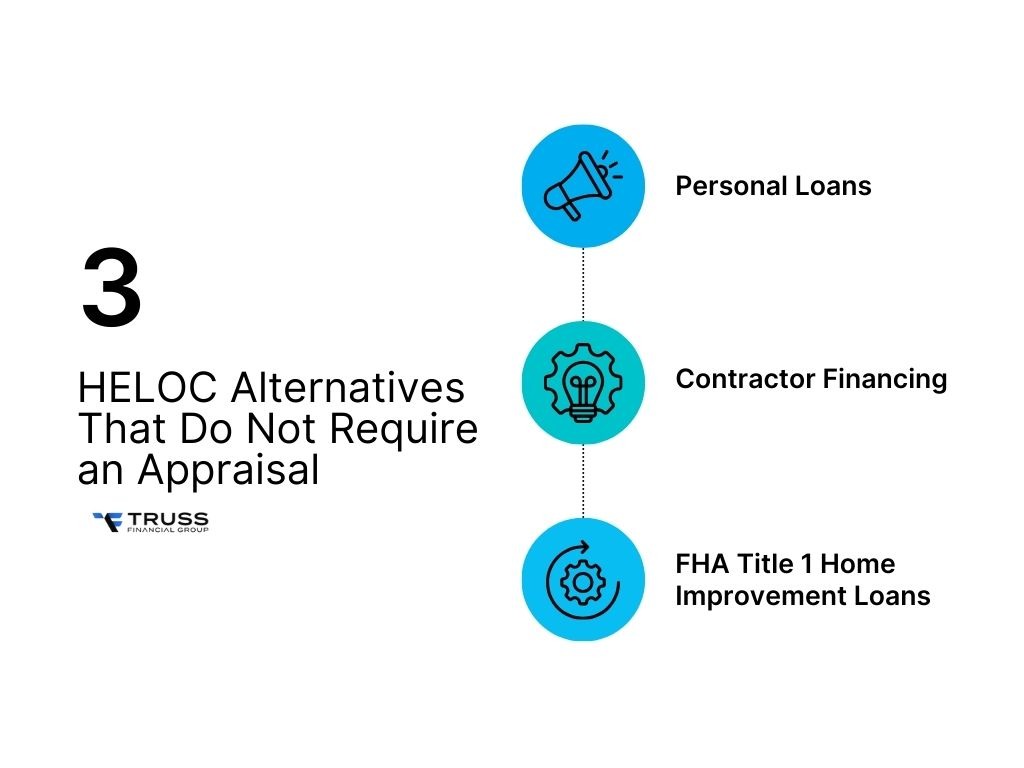
HELOC Alternatives That Do Not Require an Appraisal
Some borrowers want to avoid property valuation altogether. While these options eliminate appraisal fees, they usually come with higher interest rates, lower loan amounts, or limited flexibility.
Personal Loans
Personal loans do not require collateral or an appraisal. Approval is based on your credit score and income.
However, personal loans typically:
- Have higher interest rates
- Shorter repayment terms
- Lower maximum loan amounts
They may work for small expenses, but they are often more expensive than HELOCs for larger financing needs.
Contractor Financing
Some contractors offer financing for home improvements without requiring an appraisal. These loans are tied directly to a specific project, not to your home equity.
While convenient, contractor financing often includes:
- Higher interest rates
- Limited flexibility
- Fewer consumer protections
They are rarely the lowest-cost way to access your home’s value.

FHA Title 1 Home Improvement Loans
FHA Title 1 loans allow homeowners to finance certain improvements without using their home as collateral. Because the loan is unsecured or lightly secured, no appraisal is required.
These loans can be useful for:
- Minor renovations
- Accessibility upgrades
- Energy efficiency projects
However, loan limits are lower and terms are less flexible than a HELOC.
How to Choose the Lowest-Cost HELOC in 2026
The lowest-cost HELOC is not the one with the smallest appraisal fee or the lowest advertised interest rate. It is the one that gives you the right credit limit, the right approval path, and the lowest total cost for how you plan to use the money.
Choosing correctly comes down to three factors: how much equity you use, where your property is located, and how your income is documented.
How Much Equity You Should Use
If you only need a portion of your available equity, a no-appraisal HELOC is often the cheapest and fastest option. Because you are not trying to borrow near the maximum, the conservative valuation from an automated valuation model does not significantly affect you.
However, if you plan to use most of your available equity, paying for a full appraisal can increase your appraised value and unlock a larger credit limit. That extra borrowing power can be worth far more than the appraisal fee.
The rule of thumb is simple:
- Modest borrowing → No appraisal
- Maximum borrowing → Full appraisal

How Property Location Affects Valuation
Properties in active, urban, and suburban markets benefit from strong recent sales data and many comparable properties. These markets are ideal for digital valuations and no-appraisal financing.
Rural properties, custom homes, or homes in slow-moving markets often do not show well in AVMs. In those cases, a full appraisal provides a more accurate picture of the home’s current market value, resulting in better loan terms.
How Credit History and Income Type Matter
Borrowers with strong credit history and traditional W-2 income usually qualify for either option. But many homeowners do not fit that profile.
If you are:
- Self-employed
- Retired
- A real estate investor
- A high-DTI borrower
Then lenders that offer no-tax-return HELOCs, bank statement underwriting, DSCR HELOANs, and senior HELOCs combined with digital valuations are often the lowest-cost path, even if the appraisal is waived.
This is where lenders like Truss Financial Group design HELOC programs around real-world borrower profiles rather than rigid bank checklists.
Final Thoughts on HELOC Appraisal Cost vs No-Appraisal HELOC
The real cost of a HELOC is not just the interest rate or the appraisal fee. It is the total price you pay to unlock your home’s equity, including how much you are allowed to borrow, how fast you can access the funds, and how much friction you encounter along the way.
A traditional appraisal gives lenders a highly detailed view of your property, which can increase your appraised value and maximum credit limit. For borrowers who want to use most of their available equity, that precision can be worth paying for.
A no-appraisal HELOC, by contrast, replaces the physical inspection with automated valuation models, recent sales data, and digital property records. This approach lowers upfront costs, speeds up approval, and works especially well for seniors, self-employed borrowers, investors, and homeowners who need fast access to a flexible credit line.
The best choice is not universal. It depends on how much equity you want to use, how your home is valued, and how your income is documented. Understanding this tradeoff allows you to choose the structure that gives you the most value for your situation rather than simply chasing the lowest advertised fee.
In 2026, modern lenders like Truss Financial Group make both paths possible by combining no-appraisal HELOCs, digital underwriting, and non-QM programs that adapt to real-world borrower profiles. When you align the valuation method with your financial goals, your HELOC becomes a powerful and cost-effective tool instead of an expensive obstacle.

Frequently Asked Question:
Is appraisal necessary for a HELOC?
Not always. Many traditional lenders require a full appraisal, but some lenders approve HELOCs using automated valuation models (AVMs), hybrid appraisals, or recent appraisal data instead. Whether an appraisal is required depends on your equity, property type, loan amount, and the lender’s underwriting rules.
How much does an appraisal cost for a HELOC?
A typical full HELOC appraisal costs between $350 and $800, depending on the property’s size, location, and complexity. Drive-by or hybrid appraisals are usually cheaper, and AVM-based valuations may cost little or nothing.
Is an appraisal notice required on a HELOC?
Yes. If a lender uses an appraisal or valuation to make a lending decision, borrowers must receive a copy or notice of that valuation under federal lending regulations.
Who pays for the appraisal on a HELOC?
The borrower typically pays for the appraisal, either upfront or as part of the HELOC’s closing costs. Some lenders may waive or cover the fee as part of a promotion.
Does a HELOC loan require a home inspection?
Not always. A full appraisal includes a physical inspection, but many HELOCs are approved using digital or hybrid valuation methods that do not require anyone to enter the home.
Do HELOCs have closing costs?
Yes. HELOCs often include origination fees, title insurance, recording fees, and appraisal or valuation fees. Total closing costs usually range from 2% to 5% of the loan amount, depending on the lender.
How much does it cost to open a HELOC?
The total cost depends on the lender and loan size, but borrowers should expect several hundred to several thousand dollars in upfront fees, including appraisal or valuation costs, origination fees, and title charges.
What is the HELOC 65% rule?
The “65% rule” is a conservative guideline used by some lenders, meaning the total of your mortgage and HELOC cannot exceed 65% of your home’s market value. Not all lenders use this rule, but lower loan-to-value ratios often improve approval odds.
Can I get a HELOC without an appraisal?
Yes. Some lenders approve no-appraisal HELOCs using AVMs or hybrid valuations instead of a traditional in-person appraisal, especially when equity is strong and the property is in a data-rich market.
Do no-appraisal HELOCs have lower credit limits?
Often, yes. Because AVMs can be more conservative, lenders may set slightly lower credit limits on no-appraisal HELOCs compared to full-appraisal loans.
Are no-appraisal HELOCs more expensive?
Not always. No-appraisal HELOCs usually have lower upfront costs, but some lenders may charge higher interest rates or origination fees to offset valuation risk. The total cost depends on how much you borrow and how long you use the credit line.
What disqualifies you from getting a HELOC?
Common disqualifiers include:
- Insufficient home equity
- Poor credit history
- High debt-to-income ratio
- Unstable or unverifiable income
- Title or lien issues
- Property types that do not meet lender guidelines
What disqualifies you from a home equity loan?
Similar factors apply, including low equity, weak credit, high existing debt, or properties that are difficult to value. Home equity loans often have stricter appraisal and income requirements than HELOCs.
Is a HELOC risky compared to a home equity loan?
A HELOC is more flexible but usually has a variable interest rate, which means payments can change over time. A home equity loan has fixed payments but less flexibility. The risk depends on how much you borrow and how well you manage the credit line.

.svg)

Discuss your unique requirements
Get direct answers and a roadmap for your future.
.png?width=202&height=202&name=image%20588255187%20(1).png)

.png?width=389&height=221&name=xxxxxx%20header%20(44).png)




.svg)

.svg)
.svg)