.svg)



%20(1).svg)
%20(2).svg)
.png?width=480&height=420&name=Img%20(1).png)
%20(3).svg)
%20(4).svg)

%20(5).svg)


 View all states

7 mins
-1.png)
In this blog
Applying for a home equity line of credit can be a smart way to access your home's equity without selling the property or replacing your entire mortgage. Unlike a home equity loan, which provides one lump sum, a HELOC gives you a revolving credit line you can draw from as needed during the draw period.
That flexibility comes with underwriting. Before approving a HELOC, lenders review your equity, credit, debts, income, property value, payment history, and overall financial profile. Knowing what they check before you apply can help you organize documents, fix weak spots, and avoid surprises.
Here are the nine major items lenders typically review before approving a home equity line of credit.
Quick Answer: What Do Lenders Check Before Approving a HELOC?
Lenders usually check home equity, credit score, debt-to-income ratio, income stability, property value, loan-to-value ratio, payment history, liens, and reserves. Strong equity and clean payment history help, but the full file matters.
- Most important: available equity, credit profile, and repayment ability.
- Often overlooked: liens, reserves, draw-period payment changes, and closing costs.
- Best preparation: review your credit, estimate CLTV, gather income documents, and compare HELOC terms.

1. Home Equity and Available Borrowing Power
Home equity is the difference between your property's current value and what you still owe on the mortgage. Lenders use that number to estimate how much you may be able to borrow.
Many lenders want you to keep at least 15% to 20% equity in the home after the HELOC is approved. The stronger your equity position, the more room the lender may have to offer a larger credit line or better terms. For a deeper explanation, see Truss's guide on how much equity you need for a HELOC.
2. Credit Score and Credit History
Your credit score helps lenders judge how you have handled borrowed money in the past. Many HELOC lenders look for a score somewhere in the 620 to 700+ range, depending on the program. Higher scores can improve pricing, line size, and approval strength.
Lenders also review the full credit report, not only the score. They may look at payment history, credit utilization, open accounts, mortgage history, and recent credit inquiries. If credit is a concern, review Truss's guide to minimum credit score expectations.
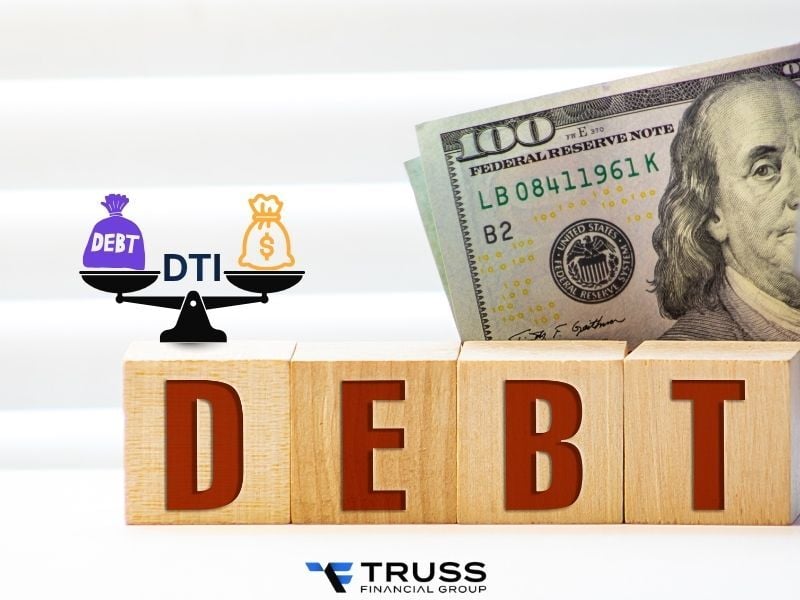
3. Debt-to-Income Ratio and Monthly Debt Payments
Your debt-to-income ratio compares monthly debt payments with gross monthly income. Lenders use it to understand whether you can handle a new HELOC payment on top of existing obligations.
Example: If your gross monthly income is $15,000 and your monthly debt payments are $5,000, your DTI is about 33%. A lower DTI can strengthen your file because it suggests more room for the new payment.
If your DTI is high, the lender may reduce the credit limit, price the loan higher, ask for more documentation, or decline the file.
4. Income Stability and Income Verification
Lenders need to know you can manage payments during both the draw period and the repayment period. Depending on your employment type, income verification may include pay stubs, W-2s, tax returns, bank statements, profit and loss statements, or other income records.
Self-employed borrowers may need more flexible documentation. If tax returns do not reflect your full cash flow, a HELOC without tax returns or bank statement HELOC may be worth exploring.
5. Property Value and Market Assessment
The lender needs a reliable property value before setting a HELOC limit. Depending on the lender and loan size, this may involve a full appraisal, automated valuation model, desktop valuation, or another property review.
The valuation affects available equity and borrowing power. If you want to understand appraisal-related options, see Truss's guide to HELOC appraisal costs vs. no appraisal HELOCs.
6. Loan-to-Value Ratio and Credit Limit
Your loan-to-value ratio shows the relationship between property value and debt secured by the property. For a HELOC, lenders often look at combined loan-to-value, or CLTV, because they need to count both your current mortgage and the proposed credit line.
Example: If the home is worth $500,000 and your current mortgage is $300,000, an 80% CLTV cap would allow total secured debt of $400,000. That could leave up to $100,000 in potential HELOC room before other lender limits are applied.
Use Truss's guide to calculate home equity and LTV before applying.
7. Payment History and Financial Reliability
Lenders want to see that you make payments on time. They may review mortgage history, credit cards, auto loans, personal loans, and other debt obligations. A clean payment history can make the file feel more stable, especially if the HELOC is large or the documentation is complex.
Missed payments do not always make approval impossible, but they can lead to stricter terms, lower limits, or additional questions from underwriting.
8. Existing Liens and Other Financial Obligations
A HELOC is secured by your home, so lenders need to know what other claims already exist against the property. Existing liens, second mortgages, tax liens, judgments, or legal claims can affect approval and lien priority.
If there are unresolved liens, the lender may reduce the credit line, require payoff, increase conditions, or decline the application.

9. Financial Reserves and Overall Financial Strength
Savings and reserves help lenders feel more confident that you can manage unexpected expenses while still making monthly payments. Reserves may include emergency funds, savings accounts, or liquid investments.
This becomes especially important when the draw period ends and repayment begins. The Federal Reserve HELOC guide notes that repayment terms can change after the draw period, which is why planning ahead matters.
HELOC Approval Checklist
- Estimate property value and current mortgage balance.
- Calculate your likely CLTV.
- Review your credit report for errors or late payments.
- Gather income documents or alternative documentation.
- List all debts and monthly payments.
- Check for liens, judgments, or title issues.
- Review HELOC closing costs.
- Understand the risk of default before borrowing against your home. Read more about what happens if you default on a HELOC.
The FTC's home equity loan and HELOC guidance is another helpful consumer resource before signing any home-secured loan.
Frequently Asked Questions
1. What is the most important thing lenders check for a HELOC?
Available home equity is one of the most important factors, but lenders also review credit, income, debts, property value, and payment history.
2. What credit score do I need for a HELOC?
Requirements vary, but many lenders look for scores in the 620 to 700+ range. Higher scores can help with pricing and approval flexibility.
3. How much equity do lenders usually require?
Many lenders want you to keep at least 15% to 20% equity after the HELOC, though requirements depend on the lender and borrower profile.
4. Do lenders always require an appraisal?
Not always. Some lenders use automated or desktop valuations, while others require a full appraisal depending on loan size, risk, and property type.
5. Can self-employed borrowers get a HELOC?
Yes. Self-employed borrowers may need tax returns, bank statements, profit and loss statements, or other documentation depending on the program.
6. Can I get a HELOC with existing debt?
Possibly. Lenders will review your total monthly payments and debt-to-income ratio to see whether the new HELOC payment is manageable.
Next Step
Prepare the File Before the Lender Reviews It
Truss Financial Group can help you review equity, documentation, credit, and HELOC program fit before you apply, so the lender sees a cleaner and more complete file.

.svg)

Discuss your unique requirements
Get direct answers and a roadmap for your future.
.png?width=202&height=202&name=image%20588255187%20(1).png)

.jpg?width=389&height=221&name=Blog%20covers%20(4).jpg)

%20(1).png?width=389&height=221&name=Blog%20covers%20(2)%20(1).png)





.svg)

.svg)
.svg)