.svg)



%20(1).svg)
%20(2).svg)
.png?width=480&height=420&name=Img%20(1).png)
%20(3).svg)
%20(4).svg)

%20(5).svg)


 View all states

6 mins
-1.jpg)
In this blog
HELOC is often considered by most homeowners given they come with lower interest rates, and is a flexible way of accessing funds. But what is important to understand is what happens if you default on a HELOC? A home equity loan or home equity lines may be helpful when funds are needed, but if one falters during monthly payments, it can lead to serious consequences.
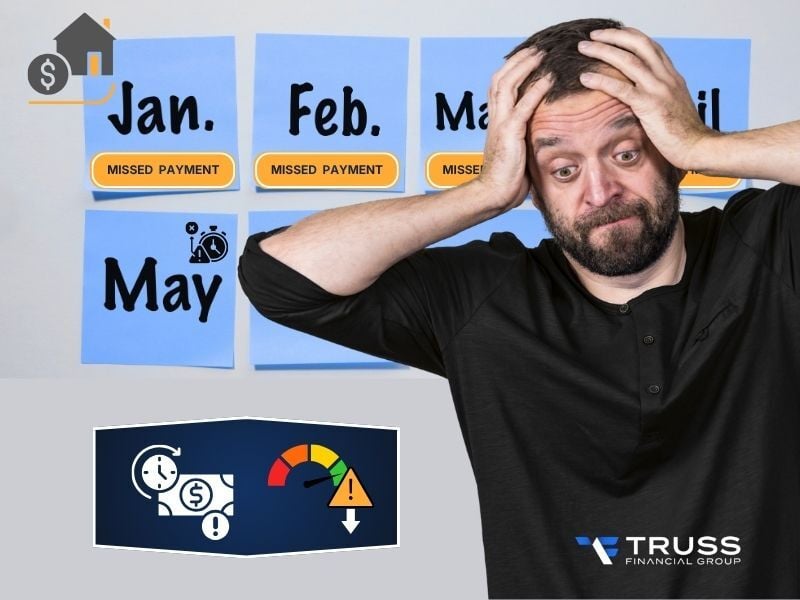
What Counts as a HELOC Default? Missed Payments and Warning Signs
A HELOC default isn’t when you falter on one monthly payment after the due date, but when there are multiple missed payments. Most lenders provide a short grace period which when missed, a late fee is applied. Unlike other types of loans, HELOC is secured with your primary residence as collateral.
When there are missed HELOC payments:
- The credit report is updated with negative activity
- The account is flagged as delinquent by the lender immediately.
- There is a significant drop in the credit score significantly.
It is essential to contact your lender immediately when any of the above happens
Immediate Actions a HELOC Lender May Take
When a borrower gets tagged as a defaulter, the HELOC lender often acts quickly to minimize the risk.
Here are few things the lender may do:
1. Freezing or Reducing Your Credit Line
Lenders often tend to freeze the line of credit and restrict access to additional funds. Even if the borrower has sufficient equity, the available credit may still be reduced or completely cut off.
2. Increased Monitoring and Charges
The lender may also add late fees, increase the interest rate or track the account activity.
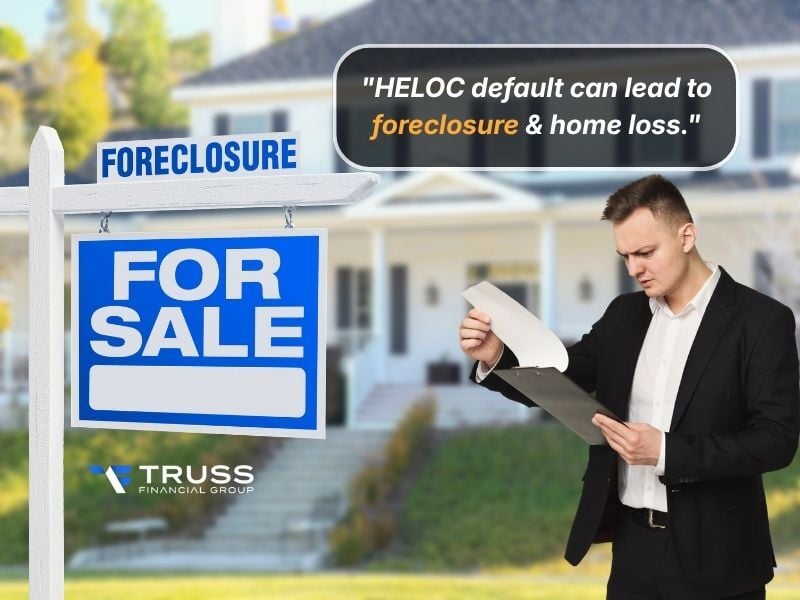
The Foreclosure Process: What Happens If You Don’t Repay
Foreclosure is one of the major risks of HELOC default. HELOC is considered as second mortgage and is associated with the primary mortgage and your home and comes with following risks if you fail to repay:
- Foreclosure process may be initiated by the lender.
- A demand letter or a legal notice may be sent/
There could be a risk to one’s primary home if the foreclosure occurs as lenders may try to sell off the primary home to recover the outstanding balance. This makes the property a possession of the lender.
Even though the HELOC is a second mortgage, the lender still has the right to foreclose, especially if there is enough value or equity in the property.
Can You Still Owe Money After Foreclosure?
One can still owe the money even if foreclosure is done. The home sale does not make up for the remaining balance that one owns and a lender may pursue a deficiency judgment. This means:
- One can still owe money after losing their home.
- A lender is free to take legal action to recover dues
- This can also lead to wage garnishment or bank recovery
In certain situations, the debt foreclosure may also become a tax liability for which one would need to consult a financial expert.
Impact on Your Credit Score and Financial Future
When one defaults on HELOC payments, there can be severe credit damage in the long term, which can significantly affect their credit score and may drop significantly and showcase as negative records on credit bureaus.
This can possibly have an impact on:
- Ability to secure future mortgage approvals
- Securing other loans or lines of credit
To rebuild the credit history again, it will take some time, discipline and effort of consistent repayment behavior.
Legal Consequences Beyond Foreclosure
In addition to the risk of losing one’s home, there are few other risks as below.
- Lenders may often involve a third party credit collection agency
- At times, this becomes a legal matter where courts may enforce legal action for recovery
- There can be severe punishments implied.
Options to Avoid Defaulting on a HELOC
If you’re struggling with HELOC payments, it’s important to act early and explore options.
1. Contact Your Lender Immediately
The best advice is to contact your lender as soon as possible. Many lenders are open to solutions before initiating foreclosure proceedings.
2. Request Loan Modifications
You may be eligible for:
- Loan modifications
- Adjusted repayment terms
- Temporary payment relief
These structured repayment plans can make your monthly payments more manageable.
3. Refinance or Consolidate Debt
In some cases, you can:
- Convert your HELOC into a fixed rate loan
- Use lower interest rates options to consolidate debt
4. Sell the Property Voluntarily
If you still have sufficient equity, a planned home sale may help you recover and avoid foreclosure.
Taking early action can significantly reduce the risk and prevent long-term damage.
Key Factors That Influence the Default Process
Here are few reasons why one tends to default on monthly repayments:
- HELOC that is taken is the first mortgage or second mortgage impacts the ability to repay a loan.
- The loan terms agreed in the loan agreement
- The dues and outstanding balance
- The present interest rates, market conditions along with one’s overall financial situation
Final Thoughts & Conclusion: Managing HELOC Risks Wisely
When one tends to default on HELOC payments, there are several impacts on the credit report along with other legal risks. One can also face the risk of foreclosure and its consequent impact on primary residence ownership along with a legal action.
While there is a risk of defaulting, it isn’t inevitable. With proactive planning, periodic communication, and in consultation with legal experts like Truss Financial Group, one can avoid defaulting and regain financial control.
Truss Financial Group can help a borrower assess their financial conditions, the loan terms and repayment plans mentioned in the agreement, and provide guidance that goes beyond just borrowing, be it during temporary challenges like a job loss, or a long term financial planning
Frequently Asked Questions
1. What happens if you miss HELOC payments?
Repeated missed payments can lead to late fees, credit damage, and eventually HELOC default.
2. Can a lender foreclose on a HELOC?
Yes, a HELOC lender can start the foreclosure process since the loan is secured by your home.
3. Will defaulting on a HELOC affect my credit score?
Yes, your credit score significantly drops and stays on your credit report for up to seven years.
4. Can I still owe money after foreclosure?
Yes, if the home sale doesn’t cover the outstanding balance, you may still owe the remaining amount.
5. How can I avoid defaulting on a HELOC?
Contact your lender, explore loan modifications, or consider refinancing to manage your payments better.

.svg)

Discuss your unique requirements
Get direct answers and a roadmap for your future.
.png?width=202&height=202&name=image%20588255187%20(1).png)

-1.jpg?width=389&height=221&name=Blog%20covers%20(5)-1.jpg)

-1.png?width=389&height=221&name=Blog%20covers%20(7)-1.png)

.jpg?width=389&height=221&name=Blog%20covers%20(1).jpg)


.svg)

.svg)
.svg)