.svg)



%20(1).svg)
%20(2).svg)
.png?width=480&height=420&name=Img%20(1).png)
%20(3).svg)
%20(4).svg)

%20(5).svg)


 View all states

7 mins
%20(2).png)
In this blog
Are you planning to buy your first home, sell a home or invest in a property? Then understanding what are comps in real estate is important before you proceed ahead. In the current real estate market, knowing the pricing of a property helps influence every aspect right from buying intention to final negotiations.
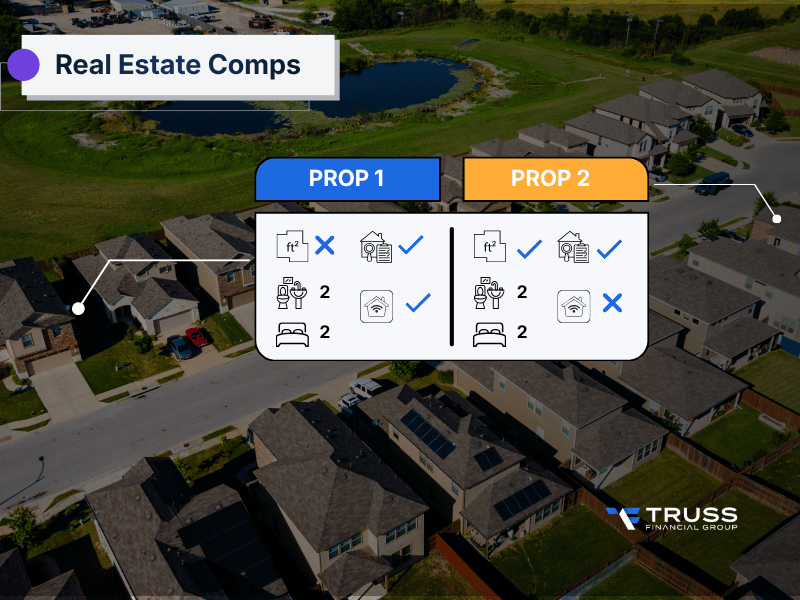
Real estate comps are properties that were recently sold and are similar to the home being evaluated. This comparable sales helps assess a property’s market value depending on the location, size, condition, and current housing trends.
Everyone in the real estate market including buyers, sellers, lenders, and appraisers rely on comps in real estate to make smarter pricing decisions. In absence of strong comps, most sellers tend to overprice and struggle to attract buyers with right offers.
What Are Real Estate Comps?
With good real estate comparable, one can assess different characteristics of the subject property being evaluated, including:
- Same neighborhood in similar location
- Easy to compare in square footage
- Similar number of bedrooms and bathrooms
- Similarity in property types, lot size and condition
- Comparable upgrades and home features
When evaluating a three-bedroom home, ideal comps are the three-bedroom homes in the same locality with similar layouts and amenities. This helps create the most accurate market estimate possible.
Why Do Real Estate Comps Matter in Today’s Market?
The current real estate market changes dynamically given the demand, supply interest rates, and local economic conditions. With this, it becomes difficult to rely on outdated pricing information.
For Home Sellers
Home sellers make use of real estate comps that help determine a competitive listing price. If the pricing is too high, it can discourage serious buyers, and too low prices can cause sellers to leave money on the table.
For Buyers
A comparable home sale enables buyers to understand if the price asked for the flat aligns with local conditions, helping one negotiate better.
For Appraisers and Lenders
A professional appraiser considers comps at the time of home appraisal process for lender’s valuation of the property.
How Real Estate Comps Work?
Let us see how real estate comps works and why it goes beyond assessing homes with similar appearances. There are different factors that help us understand if the property qualifies as a useful comp.
Location and Neighborhood
An ideal comp must be located in the same neighborhood with similar appeal and buyer demand.
A slight difference of even a few blocks can affect the value of a property. Even the presence of schools, amenities, or traffic patterns impact.
Recent Sales Matter
Most professionals assess recent sales in a specific time frame like in the last three to six months to understand the current market conditions and buyer activity.
Similar Property Features
A home with a completely finished basement, modernized kitchen, or additional garage space can raise the sale price than comparable homes which don't come with these features.

Where to Find Real Estate Comps?
There are several ways one can find real estate comps when looking for a property.
Multiple Listing Service (MLS)
The multiple listing service is a trusted source for mills comps which only includes verified property transaction data used by agents and brokers.
A skilled real estate agent helps evaluate such records.
Public Property Records
Most counties provide public property records that provide information on previous sales, property details, and ownership history.
Real Estate Websites and Online Tools
Real estate websites and online tools allow buyers and sellers to explore:
- Recently sold homes similar to their target property
- Current market listings
- Price trends
- Average price per square foot
These tools can be used to get a rough idea.
What Makes a Good Comparable Property?
Every comp is not equally reliable. Strong comparable properties generally include:
- Similar square footage
- Similar age and condition
- Matching style and layout
- Comparable lot size
- Similar upgrades and finishes
- Same local market conditions
Comparing a renovated property to a home needing repairs could result in misleading pricing conclusions. Similarly, a single family home must be compared to similar detached homes rather than condos or town homes.
Why Market Conditions Affect Comps?
The housing market is highly dynamic, especially in fast moving markets.
Several factors can influence comp values, including:
- Changing interest rates
- Inventory shortages
- Seasonal demand
- Local employment growth
- Seller incentives and seller concessions
In markets with more buyers than available homes, property values may rise quickly. In slower markets, prices may soften due to reduced demand.
This is why professionals prioritize recent and local comps instead of relying on older transactions.
Active Listings Vs Sold Properties
Many often buyers assume active listings to be a representation of true market value but it actually shows what sellers desire to receive. It is ideal to consider sold properties which reflect actual buyer behavior and finalized transaction values. A home sells only if the pricing is appropriate and reasonable.
How Appraisers and Agents Compare Homes
It is recommended to partner with a real estate professional or appraiser who assesses all details when comparing homes. This includes:
- Total number of bedrooms and bathrooms in a house
- Total usable area of a home.
- Garage spaces
- Quality of a home and renovation required
- Outdoor amenities and features
- Infrastructure development in neighborhood
- Local school zones
The appraiser then defines the estimated value based on differences between the subject property and nearby similar homes.

Common Mistakes When Using House Comps
When looking for comps, it can be helpful to make a right conclusion.
Using Outdated Sales
Past sales may not reflect the current market scenario.
Comparing When Different Property Types
One must compare the right property to the right type. One must never compare condos to detached homes or a luxury property to starter homes as it can distort value estimates.
Ignoring Market Trends
The pricing of a home is determined by the local demand, financing conditions, and inventory levels.
Collaborating with an experienced professional enables buyers and sellers to pick good comps instead of misleading comparisons.
Final Words - Why are comps important?
Understanding what comps are in real estate you can’t afford to ignore are critical for making confident property decisions. Whether buying, selling, refinancing, or investing, comps provide the foundation for accurate pricing and informed negotiations.
Strong comps reflect real buyer activity, local market conditions, and property similarities that directly affect value. Without them, buyers may overpay and sellers may struggle to attract offers in a competitive market.
At Truss Financial Group, buyers and homeowners can explore mortgage guidance and financing insights that support smarter real estate decisions in changing market conditions.
Frequently Asked Questions
1. What are comps in real estate?
Real estate comps are recently sold properties similar to the home being evaluated. They help estimate a property’s market value.
2. Why are recently sold homes better comps than active listings?
Sold homes reflect actual transaction values, while active listings only show seller asking prices.
3. How close should comparable homes be?
Ideally, comps should be within the same neighborhood or within a reasonable nearby distance, often within a half mile when possible.
4. What factors make a good comp?
Strong comps usually have similar square footage, location, condition, property type, and features.
5. Can online tools provide accurate comps?
Online tools can provide a rough estimate, but professional analysis often delivers more accurate and reliable market comparisons.

.svg)

Discuss your unique requirements
Get direct answers and a roadmap for your future.
.png?width=202&height=202&name=image%20588255187%20(1).png)








.svg)

.svg)
.svg)