.svg)



%20(1).svg)
%20(2).svg)
.png?width=480&height=420&name=Img%20(1).png)
%20(3).svg)
%20(4).svg)

%20(5).svg)


 View all states

13 mins

In this blog
Two first-time investors buy comparable rental properties in the same market, during the same month. One generates positive cash flow from day one. The other is covering expenses out of pocket within 90 days. Same market. Same interest rate environment. The difference usually is not luck. It is preparation, deal analysis, and financing structure.
Real estate investing is not a single decision. It is a system, and the investors who get it right understand that the financing layer matters just as much as the property itself. That is where DSCR loans can become useful. Instead of qualifying mainly through personal tax returns or W-2 income, a DSCR loan focuses on whether the investment property can support its own debt payment.
This guide covers the essential tips every beginner should understand, how DSCR loans work, what lenders typically review, and how to compare DSCR loan options before you commit to your first rental property.
Quick Investor Snapshot
A DSCR loan can help first-time real estate investors qualify based on the rental property's income potential, but the deal still has to make financial sense. Before comparing lenders, understand the property cash flow, your down payment, reserves, credit profile, and whether the lender supports your property type.
Main test:
Rental income compared with PITIA.
Typical buyer need:
20% to 25% down for many programs.
Best fit:
Investor properties, including rentals and some STRs.
What Every First-Time Real Estate Investor Should Know Before Buying

Most first-time investors do not struggle because they chose the wrong paint color or missed one minor repair. They struggle because they skipped the preparation. Before you contact a lender or make an offer, build your foundation first.
1. Treat Your First Investment Property Like a Business
An investment property is not the same as buying a home to live in. Personal preference matters less than the numbers. Every decision should run through one practical filter: does this property have a reasonable path to return?
Cap Rate
Measures return independent of financing. Learn how to calculate cap rate on a rental property.
Cash-on-Cash Return
Compares annual cash flow with the cash you actually invested.
Gross Yield
A quick screening tool: annual gross rent divided by purchase price.
NOI
Net operating income is gross rental income minus operating expenses, before debt service. Here is a deeper guide to what NOI means.
2. Build Your Financial Foundation First
Real estate investing should strengthen your financial position, not threaten it. Before pursuing your first investment property, have the following in place:
- 6 to 12 months of personal cash reserves.
- High-interest personal debt eliminated or reduced to a manageable level.
- A credit score that fits the lender's DSCR guidelines, often 620 minimum and stronger pricing at 680+.
- Down payment capital ready. Many investment property loans require 20% to 25% down, depending on the property, program, and borrower profile.
For context, the National Association of REALTORS reported a 10% median down payment for first-time primary residence buyers in its 2025 profile. Investment properties typically require more, so plan your cash position accordingly.
3. Understand the Real Risks and Plan for Them
Negative Cash Flow
Usually caused by overestimated rent or underestimated expenses. Stress-test your pro forma before making the offer.
Repair Surprises
HVAC, roof, plumbing, and electrical repairs can change the deal quickly. Build a separate capital reserve.
Vacancy
A property sitting empty for two or three extra months can erase thin margins. Model vacancy at 5%, 10%, and 15%.
Real estate is not liquid. Plan for a minimum hold period of three to five years. The longer the hold, the more time positive cash flow, principal paydown, and potential appreciation have to work in your favor.
4. Master the Financial Analysis on Every Deal
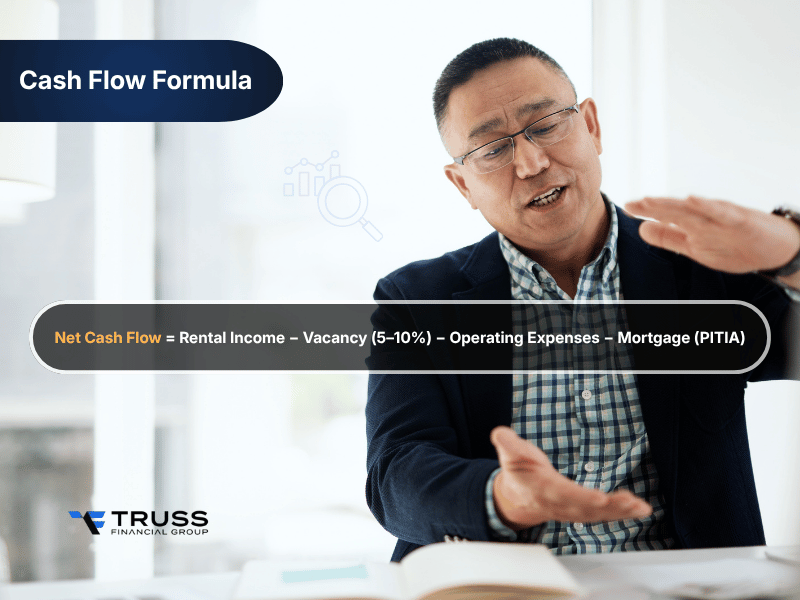
No rental property should be evaluated without a pro forma, which is simply a projection of how the property may perform financially. A simple structure looks like this:
- Gross rental income
- Minus vacancy and bad debt, often modeled at 5% to 10%
- Minus operating expenses such as taxes, insurance, management, repairs, and maintenance
- Minus mortgage payment, including principal, interest, taxes, insurance, and association dues when applicable
- Equals estimated net cash flow
That same discipline helps when you compare ROI on a rental property and when a lender reviews whether the property can qualify under DSCR guidelines.
What Is a DSCR Loan and Why Does It Matter for Your Investment Strategy?
A debt service coverage ratio mortgage qualifies a borrower based primarily on the property's rental income, not personal income, W-2s, tax returns, or pay stubs. This can make DSCR financing especially useful for self-employed investors, borrowers with complex income, and investors who want to scale without relying only on personal debt-to-income limits.
DSCR loans are non-QM loan products. That means they do not follow every standard agency rule used in conventional lending. For comparison, Fannie Mae's rental income guidance explains how rental income is documented and calculated in agency underwriting. DSCR lenders use a different investor-focused approach, though exact calculations still vary by lender and program.
How the DSCR Formula Works
DSCR = Gross Rental Income / PITIA
PITIA means principal, interest, taxes, insurance, and association dues when applicable.
Example: if the property produces $2,800 in monthly gross rental income and the monthly PITIA is $2,200, the DSCR is 1.27. A DSCR of 1.0 means the property income matches the debt payment. A ratio above 1.25 typically signals stronger cash flow. Some lenders may consider ratios below 1.0 with compensating factors, but pricing, LTV, and approval requirements can change.
Before submitting a file, run the numbers with the Truss DSCR calculator. If you want a deeper calculator walkthrough, this guide to the best free DSCR calculator explains what inputs matter.
What Properties Can Qualify for DSCR Loans?
DSCR loans are generally for non-owner-occupied, business-purpose investment properties. Short-term rental income verification can vary by lender, especially for Airbnb or VRBO properties. Some lenders use market rent, some use lease agreements, and some may rely on tools such as AirDNA, depending on the program. For more on this topic, see Truss's guide to short-term rental financing.
What the Best DSCR Lenders Actually Look At
DSCR lenders are not reviewing the file the same way a conventional lender would, but that does not mean the loan is automatic. The best DSCR lenders still evaluate the property, the borrower profile, and the risk of the transaction.
| Factor | What Lenders Review | Why It Matters |
| DSCR Ratio | Often 1.0 to 1.25 for stronger terms; some programs consider lower ratios. | Shows whether rent can cover the property debt payment. |
| Credit Score | Many programs start near 620, with better pricing at higher scores. | Credit still affects rate, LTV, reserves, and eligibility. |
| Loan-to-Value | Typically 70% to 80%, with higher LTV only for stronger files. | Lower leverage can improve pricing and approval strength. |
| Property Type | Long-term rental, STR, condo, multifamily, or rural property. | Not every lender accepts every property type. |
| Entity Vesting | LLC, trust, or other business entity ownership, depending on program. | Important for investors planning asset protection or portfolio scaling. |
| Total Cost | Rate, points, underwriting, appraisal, and closing costs. | The lowest advertised rate is not always the lowest-cost loan. |
This is also where the right loan type matters. A DSCR loan is not the only investor option. Some borrowers should compare DSCR loans vs. conventional loans, while others may compare DSCR loans vs. hard money loans if the property needs renovation or has timing issues.
Top DSCR Loan Options for First-Time Real Estate Investors

The DSCR lending market has matured, but not every lender is built for first-time investors. Some prefer borrowers with rental history. Some are stronger for short-term rentals. Some are better for long-term buy-and-hold properties. Rather than chasing one universal "best lender," compare lender fit by the deal in front of you.
What Makes a DSCR Lender First-Timer Friendly?
- The lender does not automatically require prior rental property ownership.
- The lender can explain DSCR, LTV, reserves, rate, and points in plain language.
- The lender supports the property type you are actually buying, including STRs when relevant.
- The lender can handle LLC or entity vesting if that is part of your investment plan.
- The lender gives a realistic closing timeline and a clear list of required documents upfront.
What Are the Most Reliable Lenders for No-Income-Documentation DSCR Loans?
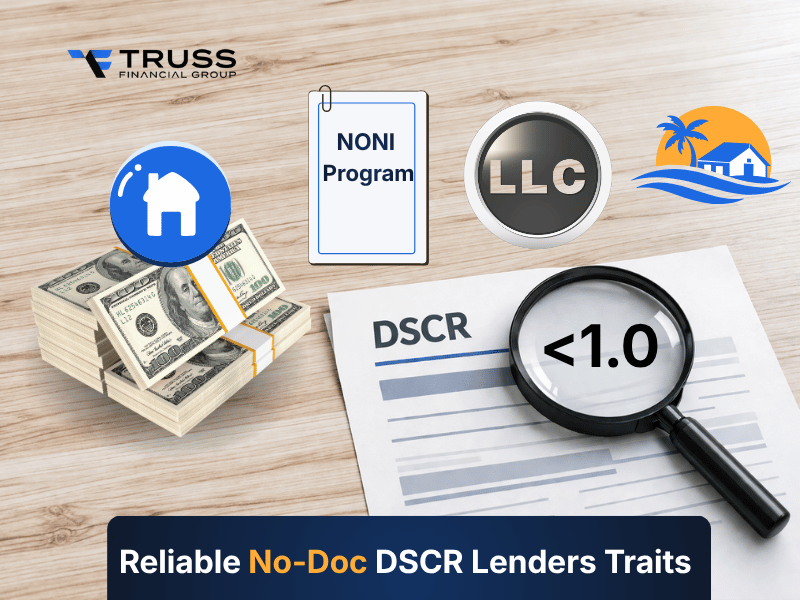
In DSCR lending, "no-income-documentation" usually means the lender is not using personal W-2s, pay stubs, or personal tax returns as the primary qualification method. The loan is still documented. The lender reviews credit, assets, property value, rent potential, title, insurance, and the DSCR calculation.
The most reliable no-income-documentation DSCR lenders tend to share a few traits:
- They explain whether the program is a true property-income loan or whether personal income may still be requested as a compensating factor.
- They clearly state the minimum DSCR ratio and how pricing changes below 1.0.
- They support the rental income documentation method that fits the property.
- They can compare loan structures, including fixed-rate, interest-only, and investor-focused options when available.
If your projected DSCR is below 1.0, do not assume the deal is dead. Some programs may still work with stronger credit, more equity, reserves, or other compensating factors. This guide explains what can happen with a DSCR loan below 1.
Down Payment, Rates, and Financing Options: What First-Time Investors Need to Know
Down payment size directly affects your LTV, and LTV affects rate, loan amount, program eligibility, and the lender's risk tier. Standard DSCR loan down payments are often 20% to 25% for investment properties, though exact requirements depend on the lender, credit score, property type, DSCR ratio, and whether the property is a long-term or short-term rental.
Rates can also vary meaningfully between lenders. Compare the rate, points, lender fees, prepayment penalty options, and whether the structure supports your investment plan. For a deeper pricing discussion, review Truss's guide to DSCR loan interest rates.
Credit unions and traditional lenders may offer investment property financing, but they often operate inside more conventional underwriting frameworks. That can mean personal income verification, debt-to-income limits, and property count restrictions. DSCR loans are often better suited when the property's cash flow is the main qualification story.
How to Compare DSCR Lenders: A First-Timer's Checklist
Before you request a quote or submit a prequalification, use this checklist to evaluate every DSCR lender you speak with. The best lender is not always the one with the lowest advertised rate.
- Does the lender welcome first-time investors or require prior rental history?
- What minimum DSCR ratio is required for the loan terms you want?
- Does the maximum LTV change for short-term rentals, rural properties, condos, or multifamily?
- Can the property be held in an LLC, trust, or S-corp?
- Which rental income documentation methods are accepted?
- What are the total costs, including origination, underwriting, appraisal, and closing fees?
- Is there a prepayment penalty, and what options are available?
- What is the average closing timeline for a complete file?
- Can the lender support future portfolio growth, refinance options, or DSCR cash-out refinance strategies later?
If you are still comparing investor financing paths, it may also help to read Truss's guide to loans for investment properties and the broader DSCR loan pros and cons.
Frequently Asked Questions
1. What is a DSCR loan and how does it work for first-time investors?
A DSCR loan qualifies the investment property based mainly on rental income compared with the property's debt payment. For first-time investors, this can be useful when the property cash flow is strong but personal income documentation is complex.
2. What credit score do I need to qualify for a DSCR loan?
Many DSCR programs start around 620, but a higher score can help with pricing, LTV, reserve requirements, and program flexibility. Exact requirements depend on the lender and property.
3. How much do I need for a down payment on a DSCR loan?
Many investment property DSCR loans require 20% to 25% down. Some programs may allow different structures for stronger borrowers, but investors should plan for a larger down payment than many primary residence loans require.
4. Can I use a DSCR loan for a short-term rental property?
Yes, some DSCR lenders finance short-term rentals, but underwriting varies. The lender may review market rent, lease income, AirDNA-style projections, or other documentation depending on the program.
5. Can I hold my investment property in an LLC and still get a DSCR loan?
Often, yes. Many DSCR lenders allow LLC vesting for business-purpose investment properties, but entity documentation and guarantee requirements vary by lender.
6. What DSCR ratio do most lenders require?
Many lenders prefer a DSCR of 1.0 to 1.25 or higher. Some programs consider lower ratios with compensating factors, but the loan may come with different pricing, LTV, or reserve requirements.
7. Is a DSCR loan better than a conventional investment property loan?
It depends on the borrower and the property. A conventional loan may be a fit for investors with clean personal income documentation. A DSCR loan may be better when the rental property's income is the strongest qualification factor.
Next Step
Before You Make the Offer, Get the Loan Structure Right
Your first investment property should not be a leap of faith. It should be a numbers-driven decision with a financing structure that fits the property, the rent, your reserves, and your long-term plan.
Truss Financial Group helps investors compare DSCR loan options, review rental-income qualification, and understand whether the deal is likely to fit current lender guidelines before it goes too far. If you are evaluating your first rental property, start with the numbers and the loan path together.

.svg)

Discuss your unique requirements
Get direct answers and a roadmap for your future.
.png?width=202&height=202&name=image%20588255187%20(1).png)






.svg)

.svg)
.svg)