.svg)



%20(1).svg)
%20(2).svg)
.png?width=480&height=420&name=Img%20(1).png)
%20(3).svg)
%20(4).svg)

%20(5).svg)


 View all states
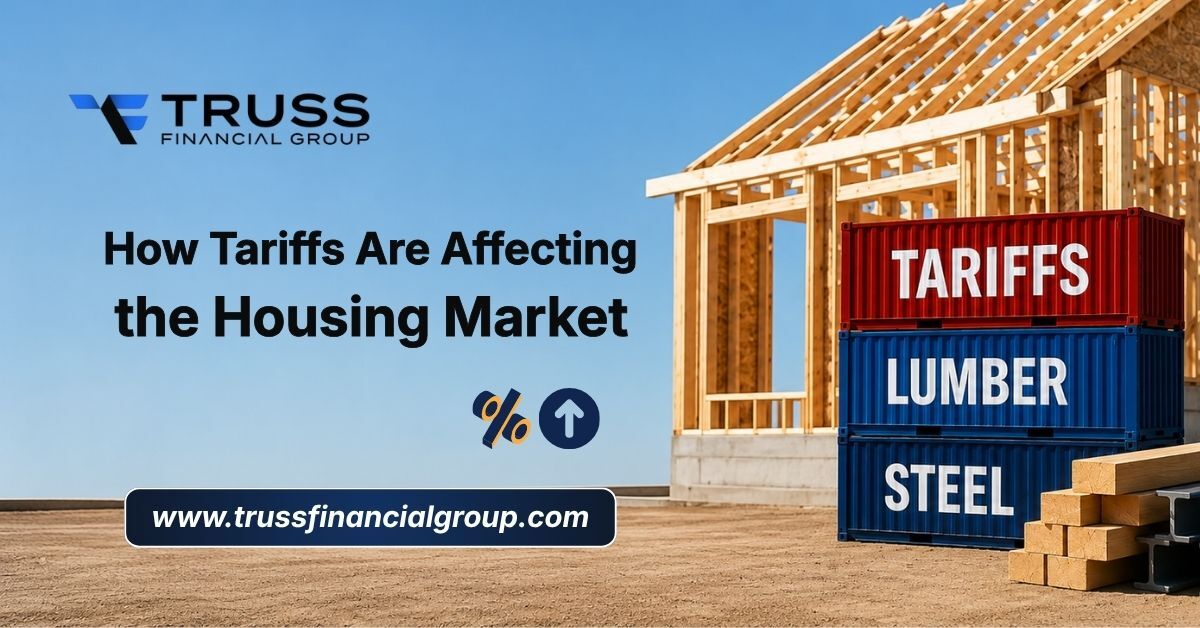
How Tariffs Are Affecting the Housing Market in 2026?

10 mins
In this blog
- What are today’s average mortgage rates in Ohio? → Add updated daily figure
- What’s the minimum credit score for an Ohio home loan? → 580–620 depending on loan
- How much down payment is required? → 0–5% depending on program
- What’s the average home price in Ohio? → Add statewide median
- Are there programs for first-time homebuyers? → Yes, through OHFA (Ohio Housing Finance Agency)
- Tariffs on lumber, steel, and aluminum have added an estimated $10,900 to the cost of a new single-family home, with more than 60% of builders reporting higher material costs
- The 30-year fixed mortgage rate averaged 6.38% as of April 2026, above where most forecasters expected, partly because tariff-driven inflation is giving the Federal Reserve little room to cut
- Buyers targeting existing homes are largely insulated from direct construction cost increases, but no buyer is insulated from the mortgage rate environment, which tariffs are helping sustain
If you entered 2026 expecting lower mortgage rates, more inventory, and a calmer housing market, you were not alone. Many buyers expected rate relief this year, but the market has stayed stubborn. Freddie Mac's weekly mortgage-rate archive shows the 30-year fixed-rate mortgage averaged 6.46% on April 2, 2026, and rates remained elevated into June.
Tariffs are not the only reason housing feels expensive, but they are one important pressure point. Higher import costs can raise construction material prices, push inflation expectations higher, and make it harder for the Federal Reserve to cut rates quickly. For buyers, builders, and real estate investors, that can mean higher home prices, tighter budgets, and fewer easy financing decisions.
Lenders like Truss Financial Group work with homebuyers, investors, and self-employed borrowers navigating exactly these conditions. This is what the data shows, where tariffs hit the housing market hardest, and what it can mean for your mortgage strategy.
Quick Answer: How Are Tariffs Affecting the Housing Market?
Tariffs can raise the cost of imported building materials, which can make new homes more expensive, slow construction, and add to inflation pressure that keeps mortgage rates higher for longer.
- New construction feels the direct cost impact first.
- Existing homes feel the indirect impact through tighter inventory and renovation costs.
- Borrowers feel it through affordability, monthly payments, and loan qualification pressure.
Why the Housing Market Feels Tariffs First
Tariffs are taxes on imported goods. When they rise, the cost increase usually moves through the supply chain until it reaches the end buyer. Housing construction is especially exposed because builders rely on materials, fixtures, appliances, and mechanical systems that are sourced through global supply chains.
The National Association of Home Builders explains the simple math: tariffs on building materials raise the cost of housing, and consumers often end up paying through higher home prices.
Softwood Lumber
Canada supplies a large share of U.S. softwood lumber imports, so duties on lumber can flow directly into framing, sheathing, and exterior work.
Steel and Aluminum
These materials show up across structural, roofing, HVAC, garage door, and mechanical systems.
Cabinets and Appliances
Finishes and appliances may be installed late in the build, but cost increases still affect the final price and closing budget.
These are not marginal inputs. They are part of the core cost structure of a home. That is why tariff pressure can show up quickly in builder pricing, renovation estimates, and buyer affordability.
What Higher Material Costs Mean in Real Dollars
The cost impact is not abstract. It shows up in builder surveys, construction projections, and housing supply forecasts.
Builder cost estimate
$10,900
Estimated added cost per new single-family home in an NAHB survey, with many builders reporting higher material costs due to tariffs.
Material pressure
40%
NAHB notes that building material costs have risen sharply since December 2020, far faster than overall inflation.
Supply impact
Fewer Builds
When material costs rise and builder confidence weakens, fewer homes may move from planning to completion.
The bigger issue is that the U.S. was already short millions of housing units before tariffs became a larger story. When new construction becomes more expensive or slows down, buyers do not simply disappear. Many shift into the existing-home market, which increases competition for the homes already available.
That can affect everything from down payment planning to monthly affordability. Buyers trying to understand the payment side can use Truss's affordability calculator before making offers in a higher-cost market.
How Tariffs Can Keep Mortgage Rates Higher
This is the part of the tariff story many buyers miss. Tariffs do not directly set mortgage rates, but they can influence the inflation backdrop that affects rate policy.
Tariffs Do Not Set Rates, But They Can Feed Inflation
Tariffs raise the price of imported goods. If those costs move through the economy, inflation expectations can rise. The Federal Reserve may respond by keeping its benchmark interest rate higher for longer or delaying cuts. Mortgage rates are not the Fed funds rate, but they are influenced by bond-market expectations about inflation and future Fed policy.
The Inflation Numbers Behind the Rate Hold
The Yale Budget Lab projected that the tariff structure in place as of April 2026 could raise near-term consumer prices and add pressure to inflation measures. That matters because persistent inflation reduces the Fed's room to cut rates aggressively.
What It Costs You in Real Dollars
When the 30-year fixed rate moves higher, the effect is immediate. A 0.25% increase on a $400,000 loan can add roughly $65 to the monthly principal-and-interest payment and more than $20,000 in total interest over a 30-year term. That is why rate movement is not just a headline. It changes the price range a buyer can comfortably support.
For more rate context, Truss tracks the broader environment in its guide to mortgage rate trends in 2026.
New Construction vs. Existing Homes: What Buyers Need to Understand
The tariff impact is different depending on whether you are buying a new build, an existing home, or a property that needs major renovation.
| Factor | New Construction | Existing Home |
|---|---|---|
| Tariff cost impact | Direct - material costs can flow into the sale price. | Indirect - priced on comparable sales, not current build costs. |
| Home price pressure | Higher if builders pass through material increases. | Lower direct exposure, but more competition if new supply slows. |
| Mortgage rate exposure | Full exposure to the same rate environment. | Full exposure to the same rate environment. |
| Renovation risk | Lower if the home is delivered finished. | Higher if the property needs major material-heavy work. |
| What to watch | Cost escalation clauses in the purchase contract. | Renovation budget, contractor timelines, and material availability. |
The mortgage rate environment affects every buyer, regardless of which column they fall into. Buyers targeting new construction carry the added burden of higher base prices and should review their purchase contracts carefully for clauses that allow builders to pass through material cost increases before closing.
Buyers targeting existing homes are more insulated from direct construction cost pressure, but renovation budgets should be revisited if significant work is planned. If the property needs major upgrades, Truss's guide to home renovation loans is a useful next read.
What This Means for Real Estate Investors and Self-Employed Borrowers
For real estate investors, the tariff environment creates a clear split. The right financing structure can determine whether a deal still works.
New Development Is Harder to Pencil
Higher material costs, elevated financing rates, and compressed margins can make ground-up construction harder to justify.
Existing Inventory May Matter More
Constrained new supply in markets with strong rental demand may benefit investors who already own or can buy strategically.
Documentation Gets More Important
Higher rates can make qualification tighter, especially when tax returns do not reflect actual cash flow.
That is where alternative documentation and investor-focused financing can matter. Self-employed mortgage options may help borrowers whose income is real but harder to show through traditional W-2 documentation. DSCR loans can qualify an investment property based on rental income rather than personal tax returns.
Investors can also compare numbers with the DSCR calculator or review broader options for investment property loans. If the goal is to access equity from a rental instead of buying new construction, Truss's guide to a DSCR cash-out refinance is also relevant.
For self-employed buyers deciding between rental-income qualification and deposit-based qualification, this comparison of bank statement mortgages vs. DSCR loans can help clarify which path better fits the file.
What Smart Buyers Are Doing in This Market
Buyers who are moving successfully in this environment are not waiting for a tariff resolution or a rate drop that may not arrive on a predictable timeline. They are making decisions based on what the market actually looks like.
If You're Buying New Construction
Ask your builder about cost escalation provisions in your purchase contract and lock in financing early, before rate movement adds further to your monthly payment. Understand exactly what you are signing before material costs shift between contract and closing.
If You're Buying an Existing Home
Recognize your relative insulation from direct material cost increases and focus your energy on rate strategy, whether that means buying down the rate, choosing a loan structure that fits your income type, or getting fully underwritten before making an offer in a competitive situation.
If You're an Investor
Concentrate on markets where the supply squeeze works in your favor and structure financing around property income rather than personal returns. DSCR and bank statement products exist precisely for this scenario.
The through-line is preparation. In a market shaped by economic uncertainty and tariff-related volatility, the buyers and investors who have their financing structured correctly before they make an offer are the ones most likely to close. If you are still testing budget ranges, Truss's self-employed mortgage calculator can help when traditional income documentation does not tell the full story.
Frequently Asked Questions
1. Are tariffs directly raising home prices in 2026?
For new construction, yes, because imported material costs can flow into the builder's sale price. For existing homes, the effect is more indirect: fewer new builds can increase competition for available inventory.
2. How do tariffs affect mortgage rates?
Tariffs can push inflation expectations higher. If inflation stays sticky, the Fed may delay rate cuts, and mortgage rates can remain higher because bond markets price in that inflation and policy risk.
3. Do tariffs affect existing homes?
Existing homes are less exposed to direct construction cost increases, but they can still be affected by tighter inventory, higher renovation costs, and the same mortgage rate environment as new homes.
4. Should I wait to buy until tariffs come down?
Waiting is not always a reliable strategy because tariff policy, rates, inventory, and home prices can move on different timelines. A better first step is to understand your payment range and loan options under current conditions.
5. What loan options make sense for investors right now?
DSCR loans can qualify an investment property based on rental income rather than personal tax returns. Bank statement loans may help self-employed borrowers whose deposits show stronger income than their tax returns.
6. Can tariffs affect renovation budgets?
Yes. Renovations use many of the same materials affected by tariffs, including lumber, metal products, appliances, cabinets, fixtures, and finishes. Buyers should build more room into renovation estimates and timing.
Mortgage strategy in a volatile market
The Market Won't Wait and Neither Should Your Financing Plan
Tariffs have reshaped the cost equation for housing in 2026, from the price of a new build to the rate on a 30-year mortgage. The buyers and investors who understand where those costs are landing, and who have the right financing structure in place before they make an offer, are better positioned to move with confidence.
If you are navigating a purchase, refinance, or investment decision in this environment, Truss Financial Group can help you compare loan options around the market as it actually is, not as anyone predicted it would be.
Buyers
Review payment range and rate strategy.
Investors
Compare DSCR and property-income options.
Self-employed
Look beyond tax-return-only qualification.
Share this article:

.svg)

Discuss your unique requirements
Get direct answers and a roadmap for your future.
.png?width=202&height=202&name=image%20588255187%20(1).png)


.jpg?width=389&height=221&name=Blog%20covers%20(2).jpg)

.png?width=389&height=221&name=Untitled%20design%20(1).png)


.svg)

.svg)
.svg)