.svg)



%20(1).svg)
%20(2).svg)
.png?width=480&height=420&name=Img%20(1).png)
%20(3).svg)
%20(4).svg)

%20(5).svg)


 View all states
HELOC Draw Period vs Repayment Period: Key Differences Explained

11 mins
In this blog
A home equity line of credit is a type of loan that homeowners who want flexibility without long-term strain can avail and is not a one-phase financial product. HELOC is a financial product that functions across two different stages where cash flow and borrowing behavior along with future obligations in different ways are influenced. This is why it is important to understand more about heloc draw period vs repayment period.
The convenience and the access to HELOC depends on ease of approval as well as how one is able to draw funds as needed instead of taking one lump sum loan. HELOC comes with a sense of control and flexibility in making repayment easy. HELOC is designed such that the most demanding phase is seen after several years of opening the credit line. It is important to understand this progression and work to estimate future payment commitments.
A HELOC is secured by home equity, unlike other forms of credit systems. The right decisions taken in the early years of line play an important role in maintaining financial stability in the long run. For this, knowing how the draw period functions, how one begins to repay and the effects of transition on monthly obligations is important for homeowners to make proper use of home equity as a planning tool rather than as a reactive tool.
Understanding the HELOC Draw Period
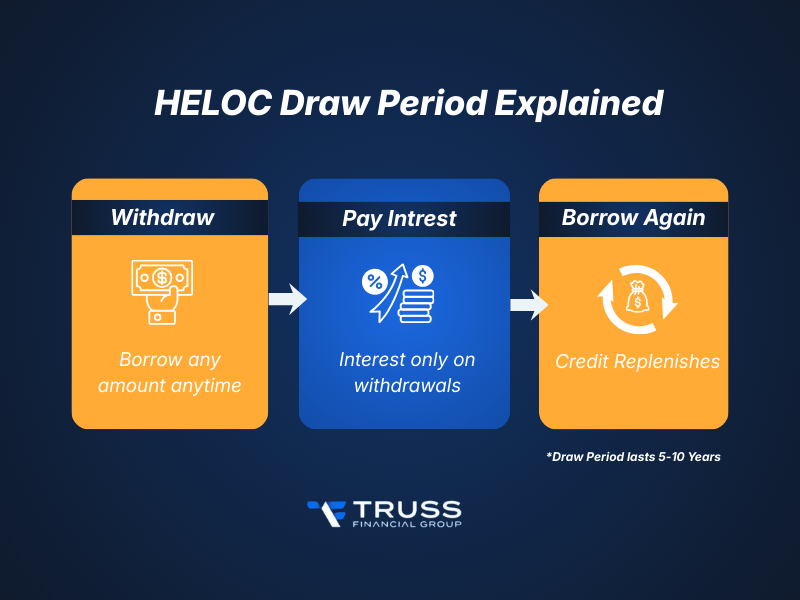
HELOC draw period is an important phase that marks the onset. It is in this phase that homeowners can access funds to the limit that is approved. A draw period topically lasts for a few years with access provided for that period of time instead of as a one-time disbursement. This helps homeowners to borrow only the desired amount of funds, pay interest only for the amount withdrawn, Borrowers can withdraw funds, repay portions, and again draw funds when needed from the balance available limit.
Access Window
The draw period typically lasts between 5 to 10 years, depending on the lender and the HELOC agreement.
Early Payments
Most often, the repayment done during the draw period is the interest only.
Principal Balance
Only after the interest amount is accrued to a certain limit, the principal amount repayment begins, also making the principal balance remain unchanged for long period if no extra payments are done.
Cash Flow
With this, the monthly payments are typically lower in the early years, making cash flow easy.
This makes HELOC an easy credit system for many given the convenience of flexible need based draw system, with lesser cash flow in the early years.
The interest rate varies during the draw period which translates to different payments across the draw period.
While the draw period may help with flexibility of withdrawing only the desired amount and paying interest only for the drawn amount, it also calls for discipline. Although repayment pressure may be limited, it is essential to evaluate how long is a heloc term to plan better finances and long term goals rather than just consider short-term comfort. The Federal Reserve guide to home equity lines of credit explains HELOC draw periods and repayment periods as part of the borrower’s planning process.
Also read on - Best Time to Apply for a HELOC
Risks and Considerations During the Draw Period
Overusing Available Credit
It is also a common trend to depend too much on the available credit, tempting one to use the available accessible funds for several expenses. This can result in the drop of available balance, making it difficult when there is a real need for the credit.
Variable-Rate Pressure
The initial interest rate and the payment is often lesser resulting in a feeling of borrowing and repayment not being an expensive issue. And this is further enhanced with variable interest rates that affect budgeting.
Future Payment Risk
A small change in the interest rate can change monthly payments and affect cash flow. It is essential to factor in the potential rate fluctuations to ensure one has some cash ready to manage stressful times without cutting on essential expenses.
Deferred Awareness
One other risk is the deferred awareness given that principal repayment is not required during the draw period, the true expense that will be incurred is overseen often when borrowing. Some HELOC agreements may include a balloon payment clause, requiring the remaining outstanding balance to be paid in full at the end of the loan term.
Keeping all aspects in mind helps homeowners look at the draw period as a phase to prepare oneself without looking at it as an open-ended borrowing window. Each withdrawal and any delays in repayment can result in future financial obligations. Homeowners can gain control over their finances, withdrawal and repayments by frequently monitoring their financial stability, the available balance and tracking interest accrual. This draw period also helps in planning better using HELOC as strategic tools.
What Is the HELOC Repayment Period?
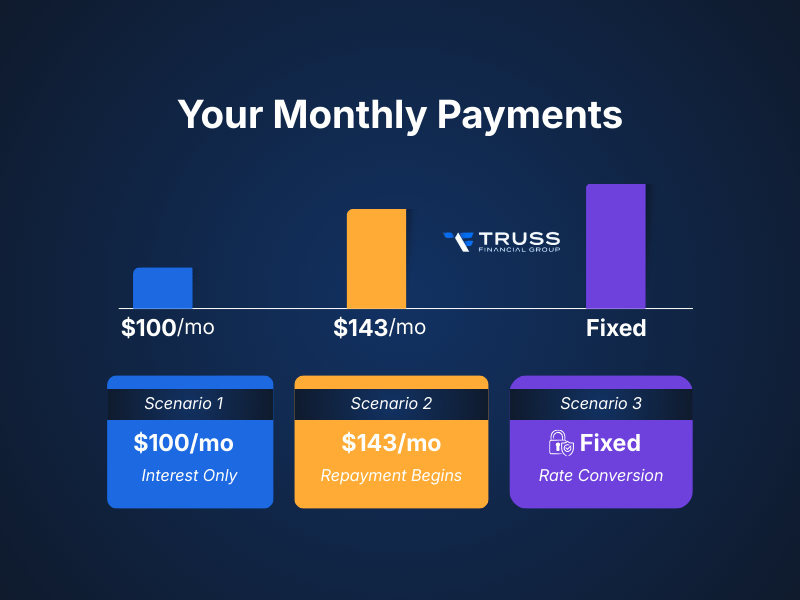
The heloc repayment period begins when the draw period ends. It is at this point any access to additional funds stops, the amount that has been drawn gets converted into a structured repayment schedule such that it includes both principal and interest.
The HELOC repayment period generally lasts 10 to 20 years, and in some cases can extend up to 30 years, during which borrowers repay both principal and interest. Repayment periods are designed to be longer than the draw period, with significantly high monthly rates causing financial disruptions for homeowners who have been used to only interest-only payments.
As interest rates are often variable in nature, payments can fluctuate making future planning very important. This is more important when the homeowner's repayment must be accommodated well in long term financial planning.
During the repayment phase, monthly payments are calculated using an amortization schedule, similar to a traditional mortgage, where each payment includes both principal and interest and the outstanding balance reduces gradually over time. The repayment period also depends when complete borrowing plans are clear as whatever amount is drawn determines the size and duration of repayment obligations.
Payment Shock Explained
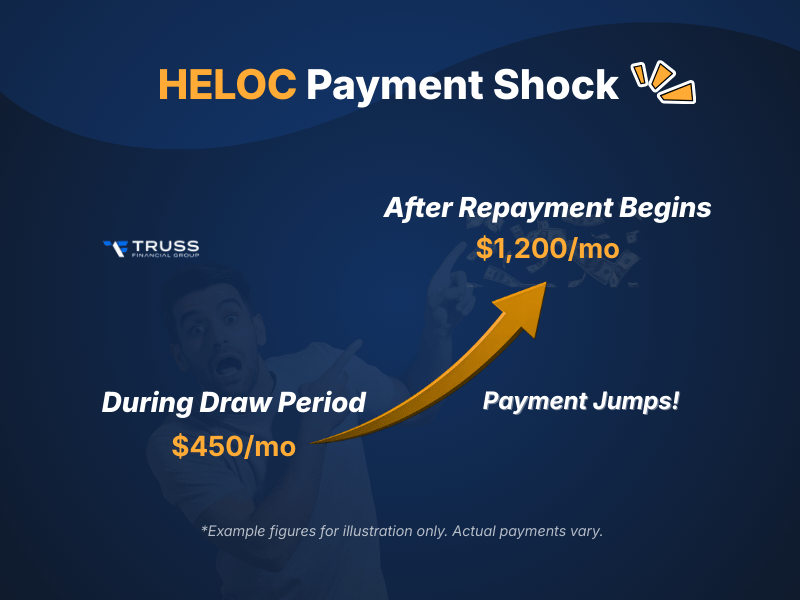
Payment shock is typically experienced when there is a sudden increase in the monthly payments and this happens most often when HELOC transitions from the draw period to the repayment period. The increase in the repayment amount is not only due to repayment of the principal but also the compounding effect of interest over time.
For example, a homeowner paying only monthly interest during the draw period may see a sharp increase in payments once full amortized repayments begin, as the payment now covers both the principal balance and accumulated interest over the remaining term.
The payment shock is also about the timing for many along with the amount. Often, one tends to not plan for the repayment period and the homeowner has other financial commitments like education costs or sudden healthcare needs, thereby struggling when the repayment period begins. Some homeowners play better at this time by repaying principal amounts during the draw period itself. This act of reducing the principal help helps with greater predictability once repayment begins.
Understanding payment shock is more than knowing numbers - it's about preparing mentally and financially. Homeowners who make voluntary principal payments or reduce unnecessary withdrawals during the draw period experience a smooth shift into repayment. With thoughtful planning, one can make the financial pressure and burden more manageable with an increase in the monthly obligations and potential interest rate changes, homeowners can manage the withdrawal and repayment keeping in mind the income, previous debts in alignment with financial goals. This makes the repayment phase a stress-free experience with a predictable, structured journey toward debt reduction.
What Happens When the Draw Period Ends?
When the draw period ends, additional borrowing isn't permitted. Once the draw period ends, the HELOC no longer functions as a revolving line of credit, and borrowers cannot withdraw or re-borrow funds under the same credit line. The amount drawn becomes what needs to be repaid. HELOC is more a traditional loan with scheduled repayments. Homeowners must evaluate their HELOC repayment terms before the draw period ends to adjust the financial goals and payment strategies before the repayment phase begins. The end of the draw period is not a sudden event but a predictable milestone that rewards preparation.
Comparing HELOC Draw Period Vs Repayment Period
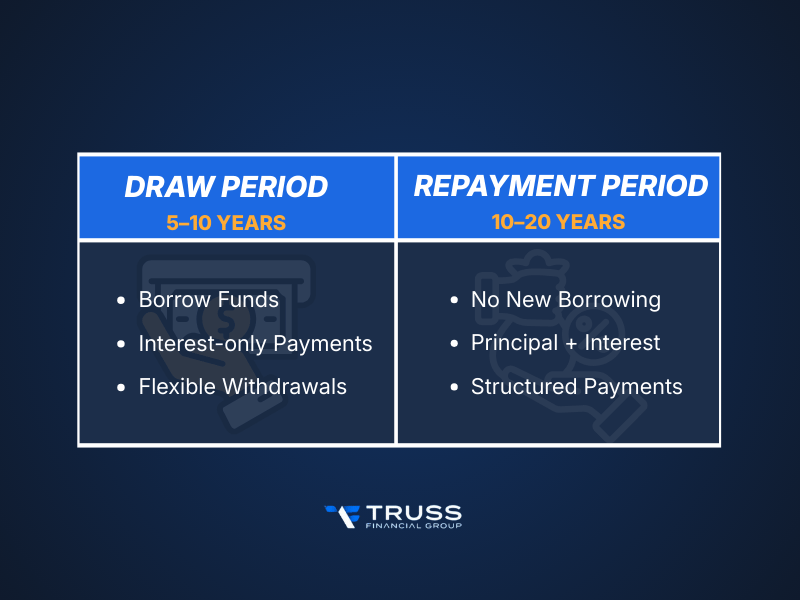
| Feature | Draw Period | Repayment Period |
|---|---|---|
| Access to Funds | Yes | No |
| Payment Type | Interest-only (usually) | Principal + Interest |
| Monthly Payment | Lower | Higher |
| Risk Level | Moderate | Higher cash flow pressure |
Common Mistakes Homeowners Make
Mistake 1
A frequent mistake one makes is assuming the payments will be very low during the draw period. This results in one not calculating the actual cost of HELOC repayment which includes the interest accrued on the withdrawals along with the principal amount repayment when the heloc time frame to draw ends.
Mistake 2
Some homeowners also rely on optimistic assumptions about future income. While income may grow, it is recommended to not plan the current borrowing plan for the future. It is recommended to plan based on the current stable income making it a better, resilient strategy with periodic reassessment.
Planning Ahead for a Smoother Transition
Preparation is one of the most effective ways to manage the shift from draw to repayment. Before planning finances, homeowners should assess current financial stability, available balance, debt-to-income ratio, and overall comfort with future payments. If higher payments during the repayment phase become difficult to manage, borrowers may consider refinancing options such as converting the balance into a fixed-rate loan or opening a new HELOC, subject to eligibility and market conditions.
Making voluntary principal payments during the draw period can also significantly lower the cumulative repayment amount. Federal regulators have also highlighted that HELOC borrowers can face challenges near the end of draw periods, especially when higher payments or rate resets begin.
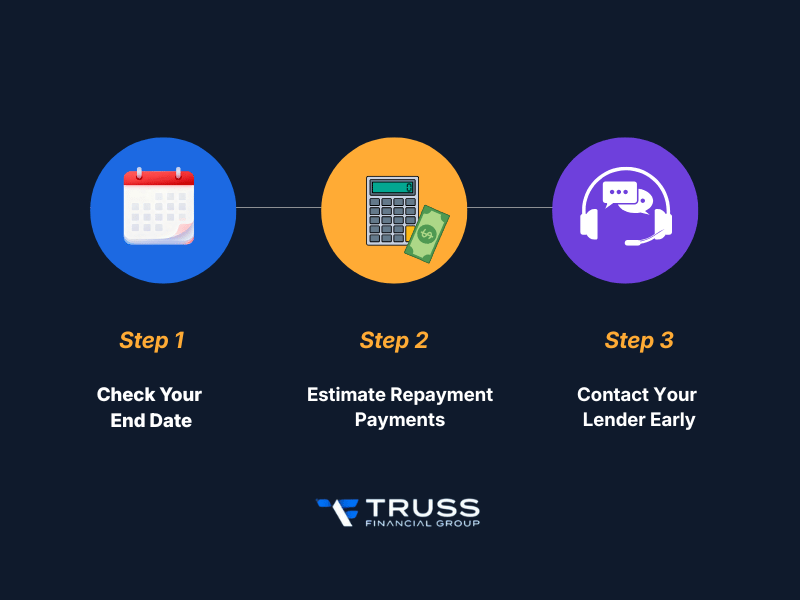
A HELOC works best when access and accountability remain balanced. Professionals such as Truss Financial Group support borrowers with qualification assessment, draw-period planning, and repayment analysis - helping flexibility today translate into financial confidence tomorrow.
Closing Perspective
Determining how long is a heloc term and getting home equity approvals is not alone enough, but homeowners must also manage and plan finances better by choosing the timing rightly, to mitigating risks, aligning with financial stability and long term goals along with proper understanding of draw period and repayment period. This helps enhance long-term stability rather than just focus on short-term convenience.
Truss Financial Group adds value here by supporting homeowners with different HELOC solutions available ranging from standard HELOCs, no-tax-return HELOCs, no-appraisal HELOCs. One can also find customized options for seniors and real estate investors. With proper selection of the product one can focus on planning better withdrawal after keen evaluation of financial goals, current stability and actual requirement of credit and plan repayment-phase ensuring that flexibility today does not turn into financial strain when repayment begins.
Frequently Asked Questions
1. What happens when a HELOC repayment period begins?
When the heloc repayment period starts after the end of draw period, one must begin repaying both the principal and interest. This causes an increase in the monthly payments with no scope to borrow more.
2. Can I extend my HELOC draw period?
At times the HELOC draw period may be extended depending on the agreement as well the credit approval, though not guaranteed.
3. Can I refinance during repayment?
One can refinance a new HELOC or home equity loan to lower the payment and move to a fixed interest rate.
4. Is the repayment period fixed or variable?
The repayment duration is fixed but monthly payments can vary if the HELOC has a variable interest rate.
5. Will my payment automatically increase?
Once the heloc draw period ends, the payments also include the principal amount in addition to the interest amounts, resulting in higher monthly payments.
6. Is a HELOC better than a cash-out refinance?
A HELOC offers flexible access to funds with interest charged only on the amount used, while a cash-out refinance provides a lump sum with fixed repayment terms. The better option depends on borrowing needs, repayment comfort, and long-term financial goals. You can also compare refi vs. HELOC options before deciding.

.svg)

Discuss your unique requirements
Get direct answers and a roadmap for your future.
.png?width=202&height=202&name=image%20588255187%20(1).png)

.png?width=389&height=221&name=Blog%20covers%20(2).png)

.png?width=389&height=221&name=Blog%20covers%20(1).png)




.svg)

.svg)
.svg)