.svg)



%20(1).svg)
%20(2).svg)
.png?width=480&height=420&name=Img%20(1).png)
%20(3).svg)
%20(4).svg)

%20(5).svg)


 View all states
HELOC Without Tax Returns: Requirements & Alternative Options Explained

7 mins
.png)
In this blog
A home equity line of credit can be useful when you want flexible access to funds for renovations, tuition, medical expenses, debt consolidation, or a cash reserve. But many homeowners run into one problem early: the lender asks for tax returns, and those returns do not always show the borrower's real cash flow.
This is common for self-employed borrowers, real estate investors, contractors, and business owners whose income may be strong but not simple. Deductions, seasonal revenue, rental expenses, and business reinvestment can make tax returns look weaker than the actual financial picture.
That is why some borrowers look for a no tax return HELOC, bank statement HELOC, or other alternative-documentation home equity program. These are not approval shortcuts. They simply let a lender evaluate income, equity, and repayment ability using different documentation.
Quick Answer: Can You Get a HELOC Without Tax Returns?
Yes, some lenders may allow a HELOC without tax returns if the borrower can document repayment ability another way. Common alternatives include bank statements, asset statements, rental income records, strong home equity, and a clean payment history.
- Best fit: self-employed homeowners, investors, and business owners with strong cash flow.
- Still reviewed: credit score, home equity, LTV/CLTV, debts, reserves, and property value.
- Important: fewer documents does not mean no underwriting or guaranteed approval.
Why Some Borrowers Look for a HELOC Without Tax Returns
Traditional lenders often rely on tax returns, W-2s, and pay stubs because those documents are easy to standardize. The problem is that not every financially strong homeowner fits that template.
A borrower may have enough cash flow to repay a HELOC but still show lower taxable income because of business deductions, depreciation, property expenses, or variable revenue. In those cases, a tax-return-only review can miss the full picture.
Self-Employed
Income may be steady overall but uneven month to month.
Investors
Rental income and property deductions can make returns harder to read.
Asset-Strong
Some borrowers rely on savings, investments, or retirement assets more than payroll income.
The FTC's home equity guidance explains that HELOCs use your home as collateral, so lenders still need a responsible way to evaluate repayment ability, even when the paperwork is flexible.
Can You Get a HELOC Without Tax Returns?
In some cases, yes. A lender may allow a HELOC without tax returns if other documents show stable cash flow, strong reserves, sufficient home equity, and an acceptable credit profile.
Instead of tax returns, lenders may review:
- 12 to 24 months of personal or business bank statements.
- Asset statements from savings, brokerage, or retirement accounts.
- Rental income records, lease agreements, or property cash flow.
- Mortgage payment history and credit history.
- Home value, current mortgage balance, and available equity.
For investors, a DSCR loan or investor-focused equity product may also be relevant because it looks more closely at property cash flow than personal tax-return income.
Situations Where Tax Returns May Not Be Required
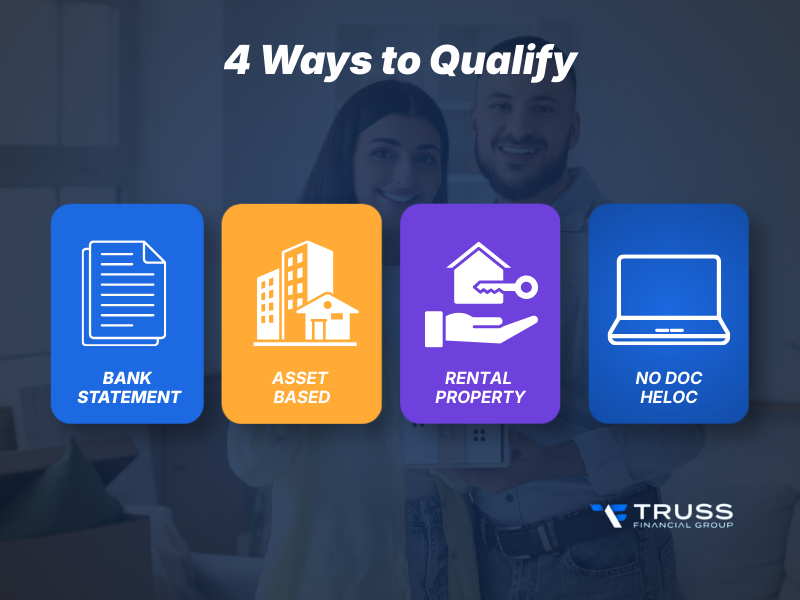
1. Bank Statement Programs
A bank statement HELOC may use deposits and cash flow instead of tax returns. This is common for self-employed borrowers and small business owners.
2. Asset-Based Review
Some lenders review liquid assets and reserves to understand the borrower's ability to handle payments.
3. Rental Income
Investors may use lease income, rent history, or property cash flow to support the file.
4. No Doc HELOC Structures
Some programs reduce income documentation, but still review credit, equity, reserves, and collateral risk.
Alternative Documents Lenders May Accept
The strongest files usually give lenders more than one way to understand repayment ability. Depending on the program, you may be asked for:
- Bank statements: personal or business deposits, recurring revenue, and cash flow.
- Profit and loss statement: useful when tax returns do not reflect current business performance.
- Asset statements: savings, investments, retirement accounts, and reserves.
- Rental income records: leases, rent rolls, property income statements, or payment history.
- Mortgage and credit history: on-time payments and responsible use of credit.
If you are not sure which path fits, compare this topic with Truss's guide to how many bank statements lenders may ask for on a HELOC.
Requirements for a HELOC Without Tax Returns
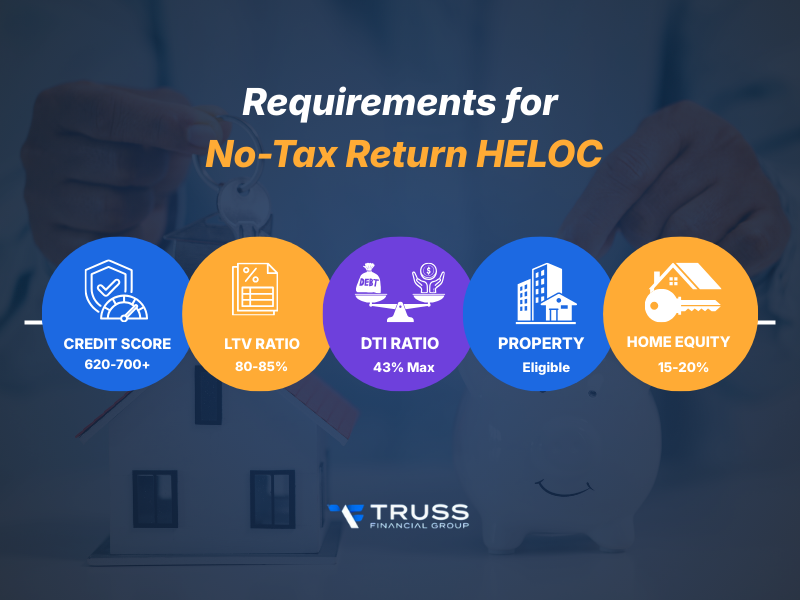
Alternative documentation can make the income review more flexible, but the core HELOC requirements still matter.
| Requirement | What Lenders Review |
| Credit Score | Many lenders want a score in the 620-700+ range, with better terms for stronger credit. |
| Equity and CLTV | Available equity after your current mortgage balance. Learn more about how much equity you need for a HELOC. |
| Debt Load | Existing mortgage, credit cards, personal loans, and debt-to-income or cash-flow measurements. |
| Property Value | Appraisal, automated valuation, or other property review depending on lender and product. |
| Reserves | Savings and liquid assets that show you can manage payments if income changes. |
The Federal Reserve's HELOC guide is also useful for understanding draw periods, variable rates, and repayment risks before you apply.
Steps to Apply for a HELOC Without Tax Returns
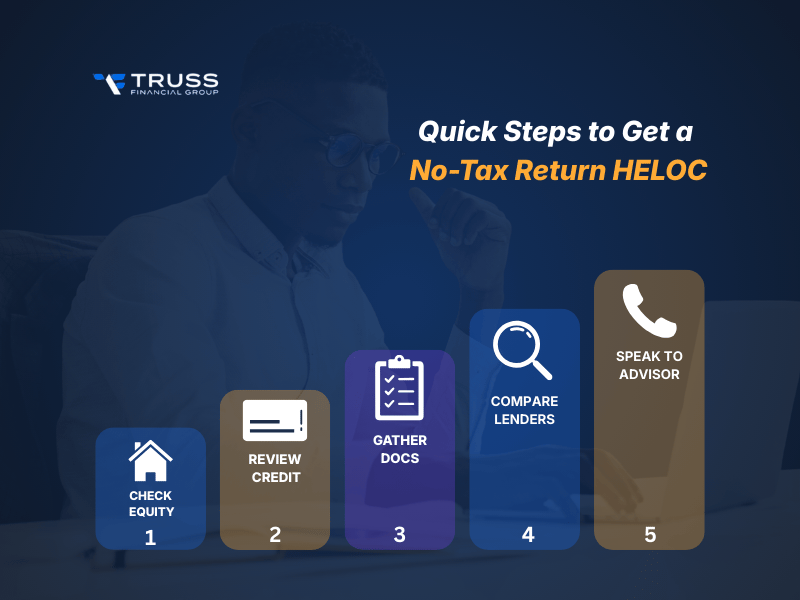
- Estimate your available equity. Review your current mortgage balance and property value.
- Review your credit profile. Check for late payments, high credit utilization, or outstanding liens.
- Gather alternative documentation. Bank statements, asset records, rental income, and business financials can all help.
- Compare lenders. Not every lender offers no doc or no appraisal HELOC options.
- Choose the right structure. A HELOC, home equity loan, or refi vs. HELOC path can each make sense in different situations.
Frequently Asked Questions
1. Can I get a HELOC without tax returns?
Yes, some lenders allow alternative documentation such as bank statements, asset statements, rental income records, or cash-flow analysis instead of tax returns.
2. Is a no tax return HELOC the same as a no doc HELOC?
Not always. A no tax return HELOC may still require bank statements or asset documentation. A no doc HELOC usually means reduced income documentation, but lenders still review equity, credit, and risk.
3. What credit score is needed for a HELOC without tax returns?
Requirements vary, but many lenders look for at least the mid-600s, and stronger credit can help with pricing, line size, and approval flexibility.
4. How much equity do I need?
Many lenders want you to retain at least 15% to 20% equity after the HELOC, though alternative-documentation programs may require more depending on risk.
5. Are rates higher when tax returns are not used?
They can be. If the lender has less traditional income documentation, pricing may be higher or the allowed loan-to-value ratio may be lower.
6. Who is a good fit for this type of HELOC?
Self-employed borrowers, investors, business owners, and borrowers with strong assets may be good candidates if their tax returns do not reflect their real cash flow.
Next Step
Find the HELOC Path That Matches Your Real Income
If your tax returns do not tell the full story, Truss Financial Group can help review whether a bank statement HELOC, no tax return HELOC, or another home equity structure fits your equity, cash flow, and goals.

.svg)

Discuss your unique requirements
Get direct answers and a roadmap for your future.
.png?width=202&height=202&name=image%20588255187%20(1).png)



.png?width=389&height=221&name=xxxxxx%20header%20(35).png)


.svg)

.svg)
.svg)