.svg)



%20(1).svg)
%20(2).svg)
.png?width=480&height=420&name=Img%20(1).png)
%20(3).svg)
%20(4).svg)

%20(5).svg)


 View all states

7 mins
-3.jpg)
In this blog
HELOC to invest in the stock market is emerging as a financial strategy when looking to expand the investment purposes beyond traditional savings. The working is very simple – simply tap a home equity by means of a home equity line, borrow money and fund investments to generate higher returns. While this approach may help one build wealth, it comes with its own significant risks that affect one’s home ownership stake as well as financial stability.
What Does Using a HELOC to Invest in the Stock Market Mean?
A home equity line or equity line of credit enables homeowners to withdraw funds depending on the market value of one’s property available after deducting the outstanding balance, if any, on existing home loans. This credit line comes with a draw period where one can withdraw funds as needed and at any given time during the defined draw period and repay the interest only initially.
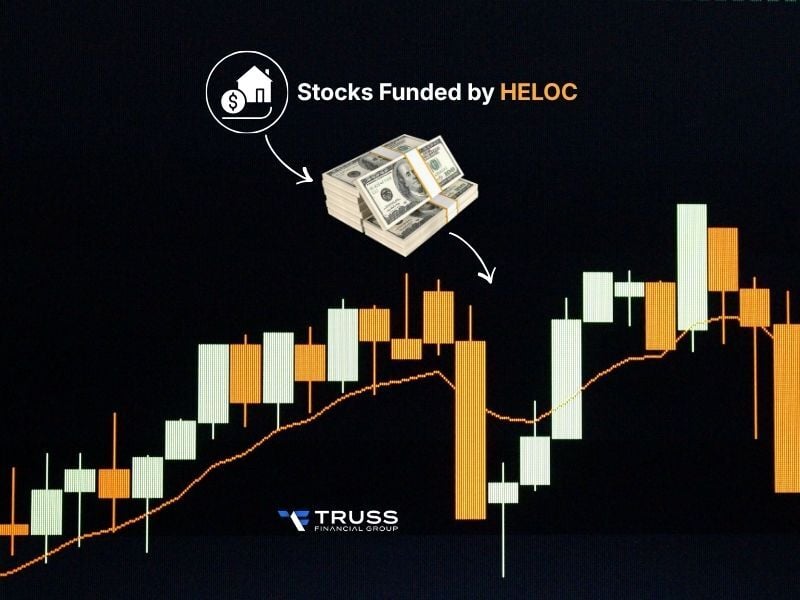
When one decides to use a HELOC for investing, one typically borrows money against the property to buy stocks, mutual funds, or even diversify into other investments. When compared to personal loans or credit card balances, HELOCs come with lower interest rates making it one of the best forms of home equity financing where one attempts to leverage their finances by converting debt to potentially significantly increase your returns.
Why Investors Consider a HELOC for the Stock Market
Leveraging Home Equity for Growth Potential
One of the major benefits of leveraging home equity is the access one gets to more money in comparison to what is already available in the bank account. This ensures the portfolio holders invest in the stock market with a higher capital base that allows them to build wealth over time. In case the returns from the stock market outperform the HELOC interest, the spread contributes positively to one’s net worth, making it appealing in favorable market conditions where equities can possibly deliver consistent gains.
Lower Borrowing Costs Compared to Other Options
A HELOC carries a variable interest rate that is lower in comparison to high-interest debt like credit card balances or unsecured personal loans. When compared to other options like margin loans, HELOCs may offer more manageable interest payments and flexible repayment options.
Additionally, borrowers avoid large upfront closing costs in some cases, making it easier to access HELOC funds quickly for timely investment opportunities.
Key Risks of Using HELOC Funds for Investing
Risk of Losing Your Home
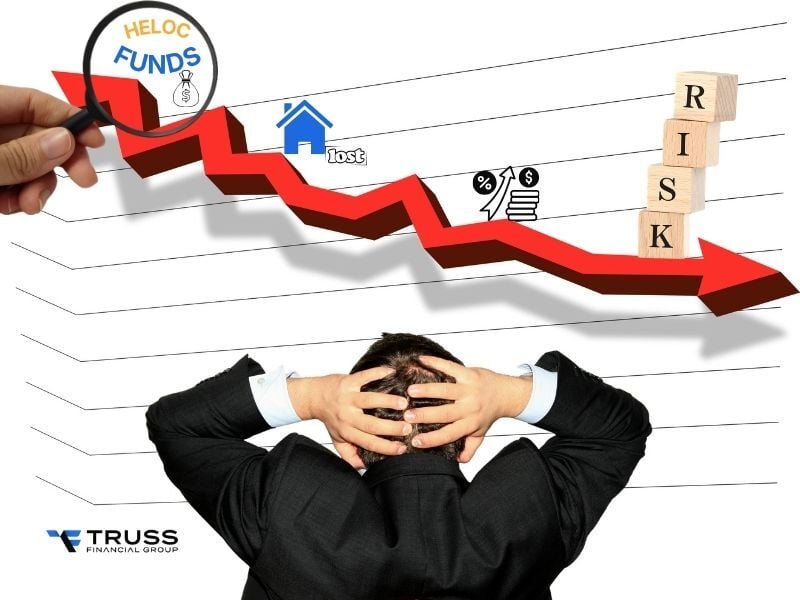
One important risk which must be considered is that a HELOC is as good as a second mortgage which is secured against the home value. One can risk losing ownership of property in case one tends to miss payments.
Market Fluctuations Can Amplify Losses
When there are market fluctuations, the property value tends to drop, which can result in a decline in your investments. However, the interest payments continue and can result in debt with reduced equity simultaneously.
Variable Interest Rate Uncertainty
Several HELOCs work on a variable interest rate, which means there could be a fluctuation in the monthly payments which can cause financial strain, especially when investments underperform.
Impact on Cash Flow and Stability
During times of unexpected expenses, the monthly payments of HELOC balance can affect cash flow and financial stability.
Comparing HELOC with Other Investment Funding Options
When evaluating loans against home equity, one tends to compare HELOC with other alternatives available as follows:
- Cash out refinance: This type of loan provides a fixed rate but offers no flexibility when one wants to withdraw funds.
- Margin loans: This type of loan is directly associated with one’s portfolio and offers margin calls during downturns.
- Personal loans: These loans are easily approved but come with higher interest rates.
- Savings or emergency fund: This type of loan has no borrowing cost but reduces liquidity.
Each option has different implications on credit, risk exposure, and long-term financial situation.

When Does Using a HELOC for Investing Make Sense?
HELOC for investing is apt in the following situations:
- When one is earning higher returns from the stock market, the value of which is higher than the HELOC interest.
- When one has stable income to manage monthly payments.
- When the credit limit is planned and used with caution.
- When one maintains an additional emergency fund.
Situations Where You Should Avoid This Strategy
HELOC for investing in stock market should be avoided in following circumstances:
- When one already has you, you already carry high interest debt.
- Your income is inconsistent.
- There is no clear repayment period plan.
- One is just beginning to invest and is not familiar with market behavior.
- When the home value is unstable given the fluctuating property values.
Strategic Considerations Before You Proceed
When planning to take HELOC to invest, assess the following conditions:
- What proportion of equity is available without leveraging too much?
- What is the total borrowing cost including interest, fees, and higher costs over time?
- Does the investment generate consistent passive income?
- Is it possible to manage both investment risk and debt obligations with your current financial conditions?
- Alignment with long-term goals like becoming a real estate investor or growing diversified assets.
When one decides to take HELOC for investing in the stock market, there is nothing good or bad about it. One must assess their financial stability and preparedness, current income with existing debts and also be aware of all potential risks before taking the decision.
While going for HELOC for investing helps in amplifying returns by means of leveraging home equity, it also poses risks to one’s home and existing investments. It is recommended to consult financial advisors like Truss Financial Group who understand the opportunities and risks and guide applicants through the process of making important financial decisions.
With a reinforced focus on long term financial goals that isn’t just about wealth creation, but also about protecting your financial stability and long-term security, one can navigate through the dynamic housing market and evolving investment landscape without any challenges.
Frequently Asked Questions
1. Can I use a HELOC to invest in the stock market during uncertain market conditions?
One can take HELOC for investing in a stock market but it can be risky, as the market fluctuations can affect the returns. This is more so when the returns are lower due to market instability, while interest payments continue, causing financial strain.
2. How does a HELOC impact my ability to get future loans?
HELOC affects the ability to get future loans by increasing the debt and affecting credit usage. In case of higher debt balances or missed monthly payments, one can face issues with loan eligibility.
3. Is it better to use a HELOC or savings to invest in stocks?
It is recommended to use savings when one wants to avoid interest, but going for heloc to invest preserves liquidity but comes with its own risk of borrowing. Choosing between both options depends on one’s financial situation.
4. Can I repay my HELOC early if my investments perform well?
One can repay HELOC earlier, provided lenders provide flexible repayment options. This helps in reducing interest payments while enhancing cash flow.
5. What happens if my investment losses exceed my HELOC borrowing?
When the investment losses exceed the HELOC borrowing, one must still repay the loan while experiencing a possible debt, a reduction in equity and an impact on net worth.

.svg)

Discuss your unique requirements
Get direct answers and a roadmap for your future.
.png?width=202&height=202&name=image%20588255187%20(1).png)








.svg)

.svg)
.svg)