.svg "Truss Financial Group")
4.6 from 700+ reviews

4.6 from 700+ reviews

4.6 from 700+ reviews
.svg)
Key Takeaways for Michigan Homebuyers
- Mortgage rates ~6%: Expect ~6.0–6.5% interest on a 30-year fixed mortgage in 2025 (as of now). Rates are higher than a few years ago, but slightly lower than 2024 on average. Plan your budget around today’s rates – and remember, you can always refinance later if rates drop.
- Home prices vary by city: Michigan’s housing market isn’t one-size-fits-all. Detroit’s median house is under $100K, Lansing around $165K, Grand Rapids about $300K, and Ann Arbor ~ $500K. Factor in local prices when deciding where and what to buy (you might afford more houses in some areas than others).
- Loan options for everyone: First-time buyer with limited savings? FHA’s 3.5% down loan or USDA zero-down might be your ticket. Veteran? VA’s zero-down loan will likely beat any other deal. Strong credit and 5%+ down? Conventional could save you money with cancelable PMI. Michigan buyers have access to all these programs – choose the one that fits your needs.
- Down payment help is available: You don’t need 20% down. Many Michigan buyers put 3–5% down or even zero with VA/USDA loans. Plus, the state offers down payment assistance loans (e.g. $7,500 or $10,000 via MSHDA) and new grants up to $25,000 for certain first-generation buyers. Explore these if saving for down payment is a hurdle.
- Work with a trusted lender: The mortgage process is much easier with guidance. A lender like Truss Financial Group can present your options (conventional vs FHA vs VA), help you get pre-approved, and ensure you’re taking advantage of any special programs. They’ll also navigate the paperwork so you can focus on shopping for the right home.
With the right information and support, you can confidently buy a home in Michigan in 2026 despite the higher rates. The dream of homeownership is still very much alive across the Mitten State!
Buying a home in Michigan in 2026 comes with new challenges and opportunities. Mortgage interest rates have risen compared to a few years ago, and home prices vary widely between Detroit, Grand Rapids, Ann Arbor, Lansing, and other cities.
The good news is that there are multiple loan programs, conventional, FHA, VA, and more to fit different buyers’ needs.
In this friendly guide, we’ll break down current interest rates, average home prices in major Michigan cities, loan types and who they’re best for, an overview of Truss Financial Group as a lender, a comparison of typical mortgage costs by city, plus pros and cons of each loan option. We’ll wrap up with key takeaways and FAQs to answer your burning questions about buying a home in Michigan this year.
Current Mortgage Interest Rates in Michigan
As of late 2025, mortgage rates are higher than the rock-bottom lows of a few years ago, but they have started stabilizing. Here’s a look at average interest rates for popular loan types in Michigan (and nationally) in 2025:
- Conventional 30-Year Fixed: ~6.1% interest rate (APR ~6.1%). This is the typical rate for a 30-year fixed mortgage without government backing. It’s higher than in 2021–2022, but slightly lower than one year ago as rates began to level off in 2025.
- FHA 30-Year Fixed: ~6.1% interest rate, but a higher ~6.8% APR due to mortgage insurance costs. FHA loans often have interest rates comparable to conventional loans, but the APR is higher because FHA requires an upfront and annual mortgage insurance premium. (More on that later.)
- VA 30-Year Fixed: ~5.6% interest rate (APR ~5.6%), which is notably lower than conventional. VA loans, available to veterans and service members, tend to offer lower rates and very low overall borrowing costs thanks to the VA guarantee (with no monthly mortgage insurance required).
These figures are averages – actual rates vary by lender and your personal qualifications (credit score, down payment, etc.). For example, on December 11, 2025, the national average 30-year fixed rate was about 6.12% APR, and Michigan rates are in a similar range. Shorter-term loans like 15-year fixed are a bit lower (~5.5% APR on average), while adjustable-rate mortgages (ARMs) can vary.
Why are rates higher now? Over 2024–2025, the Federal Reserve raised and then started to cut short-term rates to combat inflation, which indirectly affected mortgage rates. Mortgage rates hit their peak in 2024 and have eased slightly in 2025 as inflation cooled.
The bottom line: buyers today should plan for rates around 6% for a 30-year loan, which is still historically moderate (just higher than the ultra-low 3% rates of a few years back).
Average Mortgage Rates by Loan Type
For a quick snapshot, here’s a summary table of typical interest rates in Michigan by loan type:
|
Loan Type (30-year) |
Interest Rate |
APR (with typical fees/MI) |
|
Conventional Loan |
~6.1% |
~6.1% APR |
|
FHA Loan |
~6.1% |
~6.8% APR |
|
VA Loan |
~5.6% |
~5.6% APR |
Rates accurate as of Dec 2025; your exact rate will depend on your credit profile and market conditions.
Note: FHA and VA rates are often on par with or slightly lower than conventional rates, but FHA’s APR is higher due to insurance. VA loans have a one-time funding fee instead of monthly insurance, keeping the APR close to the note rate.

Average Home Prices in Michigan’s Major Cities
Home prices in Michigan vary a lot depending on the city. First-time buyers are often surprised by how affordable some areas are compared to others.
Detroit remains one of the most affordable big cities in the country. The median sale price is around $95,000, with many move-in-ready homes under $100K. Some historic or downtown neighborhoods cost more, and metro Detroit suburbs are much higher, averaging around $350K.
Grand Rapids is pricier, with a median sale price near $300,000. Strong job growth and steady demand keep values rising, but the market is still more affordable than many major U.S. cities.
Ann Arbor is the most expensive major market in Michigan. The median home price sits around $505,000, driven by high demand, limited inventory, and the presence of the University of Michigan. Buyers should expect higher taxes and more competition.
Lansing offers great affordability, with a median sale price around $165,000. Many homes fall in the low $100s, making it a strong option for first-time buyers looking for value.
Across the rest of the state, cities like Kalamazoo and Flint remain on the lower-priced end, while suburbs like Troy, Novi, and those outside Grand Rapids trend higher. Statewide, the median home price is about $250,000, making Michigan significantly more affordable than the national average.
City-by-City Mortgage Cost Comparison
What do these home prices mean for your monthly mortgage payment? Let’s compare typical principal & interest payments for a 30-year loan in each city, assuming a 10% down payment and a ~6% interest rate:
|
City |
Typical Home Price |
Monthly P&I Payment (30-yr @ ~6%) |
|
Detroit |
~$100,000 |
~$530 per month (loan ~$90K) |
|
Grand Rapids |
~$300,000 |
~$1,650 per month (loan ~$270K) |
|
Ann Arbor |
~$505,000 |
~$2,750 per month (loan ~$455K) |
|
Lansing |
~$165,000 |
~$900 per month (loan ~$148K) |
(P&I = Principal and Interest only; estimates assume 10% down, 6.1% interest. Taxes, insurance, and any PMI are not included and will add to the total monthly cost.)
As you can see, a typical mortgage in Detroit might be under $600 a month for principal and interest – often cheaper than rent for a similar home. In Grand Rapids, payments around $1,400–$1,700 are common for a median-priced house, while Ann Arbor’s high prices translate to payments well over $2,000+ per month. Lansing sits in a very affordable range (roughly $800–$900 per month).
These comparisons highlight how location affects affordability: a buyer with the same income could comfortably buy a much pricier home in Lansing or Detroit than in Ann Arbor, based on the monthly payment.
Tip: Always consider property taxes and insurance when comparing costs. Michigan property tax rates vary by city/county and will add a few hundred dollars (or more) to monthly housing costs. For example, Detroit’s property tax rate is higher than many suburbs (though the home values are low), whereas Ann Arbor’s taxes on a $500K home will be substantial. Be sure to use a mortgage calculator with taxes and insurance for a true cost comparison.
Understanding Your Home Loan Options (Conventional vs. FHA vs. VA)
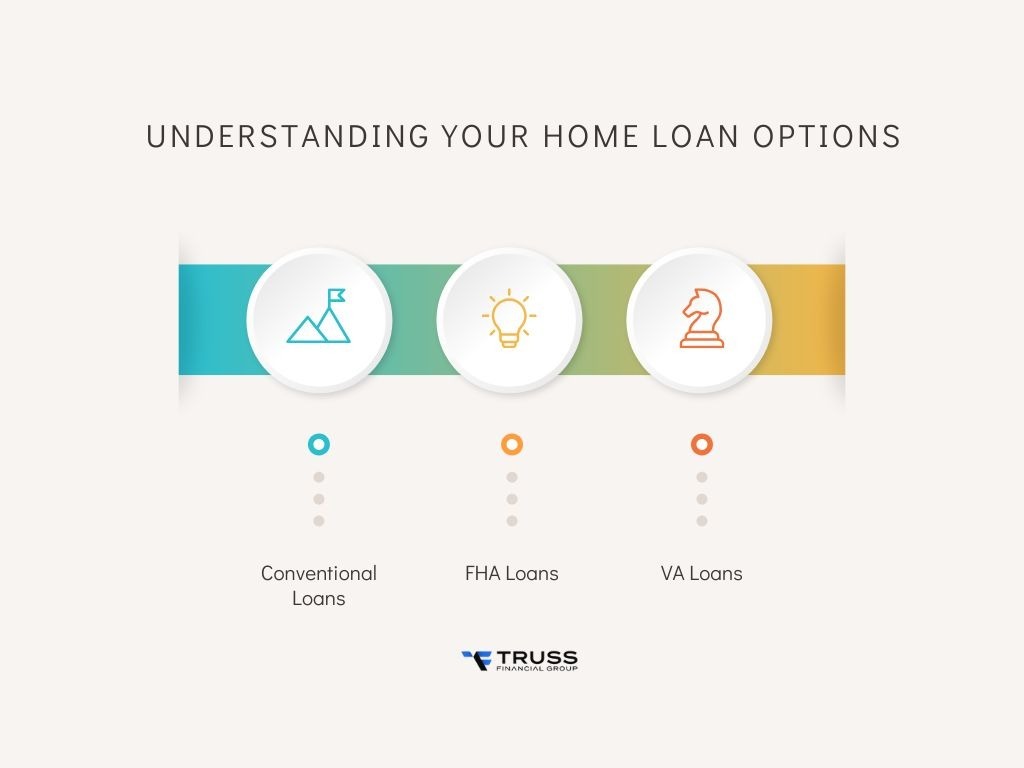
There are several mortgage loan types available to Michigan homebuyers, each with its own advantages. The three main categories are Conventional loans, FHA loans, and VA loans. (There’s also USDA rural loans, and specialized programs, which we’ll touch on.) Here’s a breakdown of each loan type, and which kind of buyer they tend to suit best:
Conventional Loans
Conventional loans aren’t government-backed and suit buyers with good credit and a down payment. Down payments can be as low as 3%, with PMI required if under 20% (removable after 20% equity). Minimum credit is usually 620+, and DTI max ~43%. Appraisal rules are standard. Best for buyers with stable income, some savings, and homes up to $726,200 in Michigan.
FHA Loans
FHA loans are insured by the federal government, ideal for first-time or low-to-moderate income buyers. Down payment starts at 3.5% for credit 580+, with mortgage insurance required (MIP). Credit and DTI requirements are more flexible, but property standards are stricter. FHA limits in Michigan are ~$472,030. Good for buyers with lower credit or minimal savings.
VA Loans
VA loans are for eligible veterans, active-duty service members, and some surviving spouses. They offer zero down, no monthly mortgage insurance, below-market interest rates (~mid-5%), and flexible credit requirements. Must be for a primary residence and meet VA property standards. Ideal for VA-eligible buyers looking for maximum purchase power and low monthly payments.
Other Loan Options (USDA, Jumbo, etc.)
While conventional, FHA, and VA are the big three, Michigan homebuyers might encounter a couple of other loan types:
USDA Rural Development Loans
USDA loans offer 0% down for homes in eligible rural areas of Michigan. They target moderate-income buyers, with income limits, and feature low rates plus a small annual fee (~0.35%). Ideal for rural/suburban buyers, especially first-timers. Limitations: property must be in a qualifying area and meet income requirements.
Jumbo Loans
Jumbo loans are for high-priced homes exceeding conventional limits (e.g., $800k+). They usually require 20% down and 700+ credit, with slightly higher rates. Suitable for luxury properties, like some Ann Arbor homes; most Michigan buyers won’t need these.
Knowing these options, how do you choose? It really depends on your personal situation:
- If you’re a veteran or active-duty – VA will likely be your best bet for the reasons above.
- If you’re a first-time buyer with lower credit or minimal down payment – FHA is a strong option to get you approved and into a home sooner.
- If you have good credit and at least 5% down – a conventional loan might save you money long-term (especially once you remove PMI).
- If you’re buying rural and qualify for USDA – that zero-down offer is hard to beat.
Don’t worry – a good lender (like Truss Financial Group) will walk you through these comparisons, so you can choose the loan that meets your needs.
Pros and Cons of Popular Michigan Home Loans
Let’s summarize the major pros and cons of the main loan programs available to Michigan buyers:
|
Loan Type |
Pros |
Cons |
|
Conventional |
Low down payment (3% for first-time buyers); no upfront fee; PMI removable at ~20% equity; not restricted to groups or areas; flexible property types |
Requires higher credit score (~620+); PMI adds to payment if <20% down; stricter debt-to-income limits; larger down payment needed to avoid insurance |
|
FHA |
Only 3.5% down with 580+ credit; easier approval for lower credit/income; slightly lower interest rates than conventional; assumable by future buyer |
Upfront and monthly MIP regardless of down payment; MIP can last for life if <10% down; lower loan limits; property must meet HUD condition standards |
|
VA |
Zero down for eligible veterans/service members; no monthly mortgage insurance; typically lowest interest rates; more forgiving on credit; no loan limit for full entitlement |
Only for VA-eligible borrowers; one-time VA funding fee (2.3% for first-timers, some exempt); must be primary residence; property must meet VA guidelines; sellers may worry about appraisal |
|
USDA |
0% down; moderate credit OK (usually 640, some as low as 580); low monthly fee (~0.35%); can roll closing costs into loan |
Restricted to USDA-eligible rural areas; income limits apply; slower USDA approval process; property must be modest (no working farms/excess acreage) |
Truss Financial Group – Your Michigan Mortgage Partner
When navigating loan options, having a lender who offers all programs and guidance is key. Truss Financial Group provides conventional, FHA, VA, USDA, jumbo, reverse, and self-employed loans across Michigan.
They work with over 90 banks to approve loans others might deny, with 81% approval in 2024. Truss also shops for competitive rates, helps close loans quickly, and offers expert guidance for each loan type, including VA and FHA specialists.
Licensed in Michigan, they combine local knowledge with national reach, helping buyers tap into programs like MSHDA down payment assistance. Pre-approval, side-by-side loan comparisons, and personalized solutions make the process easier and less stressful.
Reach out to Truss for a free consultation or rate quote with no impact on credit. They help identify the right loan, eligibility for programs, and any special offers, empowering homebuyers with confidence and options.

FAQs
Q: What are the current mortgage interest rates in Michigan?
A: Conventional rates average about 6.1%, FHA around 6.1% (~6.8% APR), and VA roughly 5.5–5.6%. Rates vary daily based on your credit, down payment, and when you lock.
Q: Are there first-time home buyer programs or grants in Michigan?
A: Yes, MSHDA offers $7,500–$10,000 in assistance, plus a pilot program up to $25,000 for first-generation buyers. Many cities also offer grants that lower your upfront homebuying costs.
Q: What credit score do I need to buy a house in Michigan?
A: Conventional loans usually need 620+. FHA allows 580 (or 500 with 10% down). VA typically wants around 620, USDA about 640. Lower scores can work with strong income and low debts.
Q: How much down payment is required? Do I need 20%?
A: No. Conventional needs 3%, FHA 3.5%, and VA/USDA 0%. Most Michigan buyers put 6–7% down. Twenty percent is optional and mainly helps avoid PMI.
Q: How can Truss Financial Group help me?
A: Truss provides quick pre-approvals, access to 90+ lenders, and creative solutions. With an 81% approval rate, they match you with the right loan and help you use Michigan assistance programs.
Get the information you need to make confident decisions
Discover your borrowing power and plan your mortgage journey with knowledge on your side.
Get a quote- No documents required
- No commitment
- No commitment
Get a quote in 3 easy steps
Tell us what you want
Fill out our online form to help us understand your financial situation and loan needs.
We get to work for you
We review your info and look for competitive rates that match your specific goals.
You get a personalized quote
You’ll receive a customized rate quote that meets your unique profile.