.svg)



%20(1).svg)
%20(2).svg)
.png?width=480&height=420&name=Img%20(1).png)
%20(3).svg)
%20(4).svg)

%20(5).svg)


 View all states
What Is a Foreclosure? How the Foreclosure Process Works and How to Stop It

15 mins
.png)
In this blog
Key Takeaways
- Foreclosure is a legal process where your lender takes back your home after missed mortgage payments, but it takes months, not days, giving you time to act.
- You have the most power during pre-foreclosure (after missing payments but before a sale date) when options like loan modification, refinancing, or using home equity can still save your home.
- Even in late-stage foreclosure, alternatives like short sales or deed-in-lieu agreements can protect your credit better than letting the process complete.
Missing a mortgage payment feels like standing at the edge of a cliff. Your stomach drops. You wonder how much time you have. You worry about your family, your belongings, and where you'll go.
But here's what most people don't know: foreclosure is not instant. It's a process that unfolds over months, sometimes over a year. And during that time, you have more control than you think.
This guide explains what foreclosure actually means, how the foreclosure process works step by step, and most importantly, what you can do to stop it or find a better path forward.
Some lenders, like Truss Financial Group, help homeowners explore financing options when traditional banks say no. However, this article is about understanding your rights first. Knowledge is the foundation of every good decision.
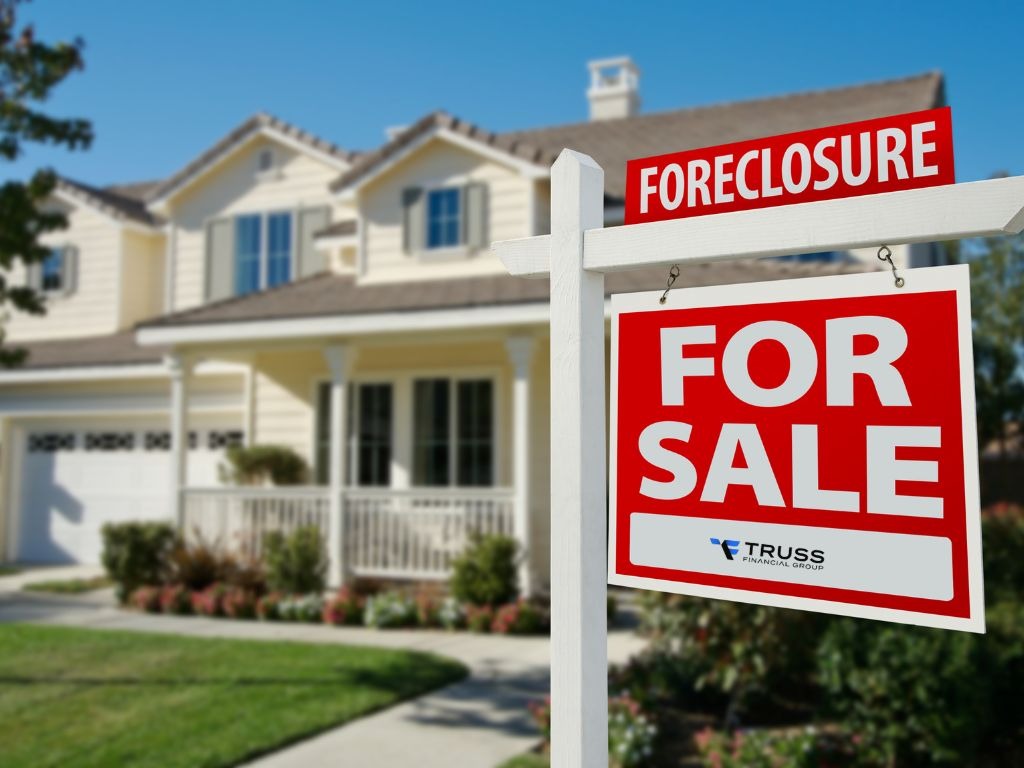
What Is Foreclosure?
Foreclosure is what happens when a lender takes back a home because the mortgage loan wasn't paid. It's the legal process mortgage companies use to recover their money when a homeowner can no longer make monthly payments.
Foreclosure exists in every state because mortgage loans are secured by real estate. The home itself is collateral. When mortgage debt goes unpaid for several months, the lending bank has the legal right to start foreclosure proceedings.
Why do lenders foreclose? Because they need to recover the loan balance. They don't want your house; they want to be repaid. But when a homeowner fails to pay, and all other options run out, foreclosure becomes the last resort.
Where Are You in the Foreclosure Timeline?
Before we go further, let's figure out where you stand right now.
If you've missed one to three mortgage payments and received a Notice of Default, you're in pre-foreclosure. This is the warning phase. You still have significant power to change the outcome.
If you've received a lawsuit, a sale date, or an eviction notice, you're in late-stage foreclosure. Your options are narrower, but they still exist.
Understanding which phase you're in helps you focus on the right solutions.
What Is Pre-Foreclosure? (Where Most People Are)
Pre-foreclosure is the period between your first missed mortgage payment and the actual foreclosure sale. This is where most homeowners are when they start searching for answers.
Here's what happens during pre-foreclosure:
- You miss one or more monthly payments
- Your loan servicer contacts you repeatedly
- You receive a Notice of Default
- The lender files legal papers (in judicial foreclosure states) or records a notice (in nonjudicial foreclosure states)
- You enter a waiting period before the sale date
This is the best time to act. During pre-foreclosure, you still have leverage. You can negotiate with your lender, apply for loss mitigation programs, or explore refinancing options. Once the sale happens, it's over.
Federal law says lenders typically wait until a payment is at least 120 days delinquent before starting formal foreclosure proceedings. That gives you roughly four months to get help after your first missed payment.
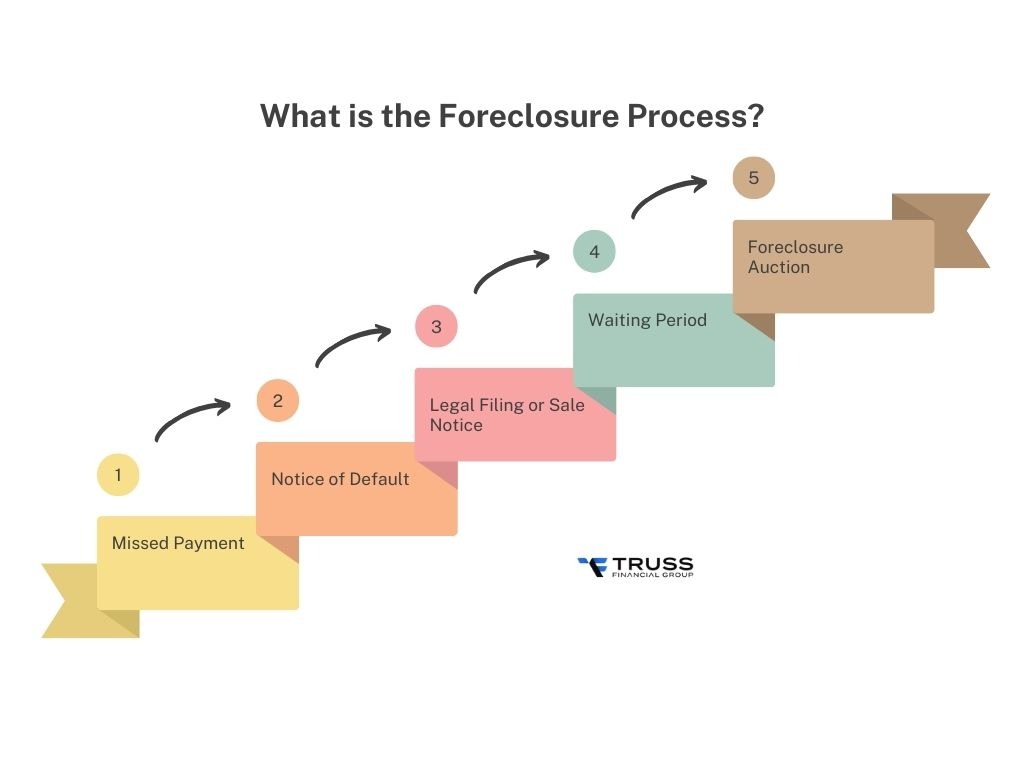
What is the Foreclosure Process?
The foreclosure process generally follows these steps:
Step 1: Missed Payment
Your loan is technically in default after the first missed payment, but lenders don't start foreclosure right away. They'll contact you by phone, email, and mail.
Step 2: Notice of Default
After about three to four missed payments (90 to 120 days), the lender sends a Notice of Default. This formal notice says you're behind and gives you a deadline to catch up.
Step 3: Legal Filing or Sale Notice
In judicial foreclosure states, the lender files a lawsuit. In nonjudicial foreclosure states, they record a Notice of Sale with the county recorder's office.
Step 4: Waiting Period
You get time to respond, anywhere from 20 days to several months, depending on state law and whether you request mediation.
Step 5: Foreclosure Auction
If you don't resolve the debt, the property goes to a public sale. The lender or other bidders can buy it.
Step 6: REO (Real Estate Owned)
If no bidders participate in the auction, the lender retains ownership. The property becomes part of their Real Estate Owned inventory.
Timelines vary by state. The entire foreclosure process can take anywhere from a few months to over a year. Judicial foreclosure states tend to move more slowly because court action is required.
Types of Foreclosure: Judicial vs Non-Judicial Foreclosure
There are two main types of foreclosure: judicial and nonjudicial.
Judicial foreclosure requires the lender to file a lawsuit in court. A judge oversees the case. You receive legal papers, and you have the right to respond and participate in court proceedings. This process takes longer but gives homeowners more opportunities to negotiate or find alternatives.
States that require judicial foreclosure include Florida, New York, New Jersey, Illinois, and Pennsylvania, among others.
Nonjudicial foreclosure happens when your mortgage includes a power of sale clause. The lender doesn't need court approval. They simply follow the legal process outlined in state law: recording notices, waiting the required time, then holding the sale.
Nonjudicial foreclosure states include California, Texas, Arizona, Georgia, and Michigan. These foreclosures move faster because there's no court clerk to schedule hearings or redemption period extensions.
Why does this matter? If you're in a judicial state, you have more time and more chances to stop the process. If you're in a nonjudicial state, you need to act quickly.

What Happens at a Foreclosure Auction?
A foreclosure auction is a public sale where your home is sold to the highest bidder.
Here's how it works:
- The lender sets a minimum bid, usually based on the loan balance
- The auction is advertised in local newspapers and online
- Buyers bid in person or online, depending on the state
- The highest bidder wins and pays immediately or within a few days
- The sale is final
If the sale price exceeds your mortgage debt and any other loans or liens on the property, you might receive the leftover money. But this rarely happens. Most foreclosed properties sell for less than market value.
If nobody bids at the auction, the lender takes ownership. The home becomes an REO property, and the lender will eventually sell it through a real estate agent.
How Foreclosure Affects Your Credit and Life?
Foreclosure doesn't just take your house. It impacts your life in ways that last for years.
- Your credit score drops significantly: A foreclosure can reduce your score by 85 to 160 points. It stays on your credit report for seven years, making it harder to rent an apartment, get a car loan, or qualify for a new mortgage.
- You face emotional and physical stress: Individuals who experience foreclosure often face symptoms of major depression.
- Your neighborhood suffers: Foreclosure can lead to increased crime rates in neighborhoods due to abandoned properties. It also decreases property values in surrounding areas, affecting your neighbors' home equity.
- Future housing becomes harder: After foreclosure, only about 20% of individuals choose to live in households where one person maintains a mortgage. Most become renters, and even that can be difficult with a foreclosure on record.
This is why avoiding foreclosure matters, even if you're planning to leave the house anyway. A short sale or deed in lieu of foreclosure does less damage.
Ways to Stop or Avoid Foreclosure
Your options depend on how far along you are in the process.
If You're in Early-Stage Foreclosure (Pre-Foreclosure):
Loan Modification
Your lender permanently changes your loan terms, lowering your interest rate, extending the repayment period, or adding missed payments to the loan balance. This makes payments more affordable long-term.
Forbearance
Your lender temporarily pauses or lowers your mortgage payments, giving you time to recover financially. You'll need to repay the missed amount later through a lump sum or a repayment plan.
Repayment Plan
You add a portion of your past-due amount to your regular monthly payments until you're caught up. This works if you've only missed a few payments and your financial situation has stabilized.
Refinance
If you still have decent credit and equity, refinancing to a lower interest rate or longer term can reduce your monthly payment. Some homeowners choose a non-QM refinance when they don't qualify for traditional loans due to income documentation issues.
HELOC (Home Equity Line of Credit)
If you have equity in your home, you might use home equity to stop foreclosure by accessing cash to pay off the past-due balance. A no-appraisal HELOC can move quickly when time is critical.
If You're in Late-Stage Foreclosure (Sale or Lawsuit Scheduled):
- Short Sale: You sell your home for less than you owe with your lender's approval. A short sale vs foreclosure comparison shows that short sales damage your credit less and might help you qualify for a new mortgage sooner.
- Deed in Lieu of Foreclosure: You voluntarily transfer your property title to the lender. They cancel your remaining mortgage debt. It's not ideal, but it's better than foreclosure.
- Bankruptcy Consultation: Filing Chapter 13 bankruptcy can stop foreclosure temporarily by creating a repayment plan. This is a last resort with long-term consequences, but it buys time.
- Emergency Equity Options: If you have significant equity, some lenders offer emergency refinancing programs for homeowners with credit issues.
Truss Financial Group works with homeowners who don't qualify for traditional loans due to income type or credit history, including self-employed mortgage options for business owners facing financial difficulties.
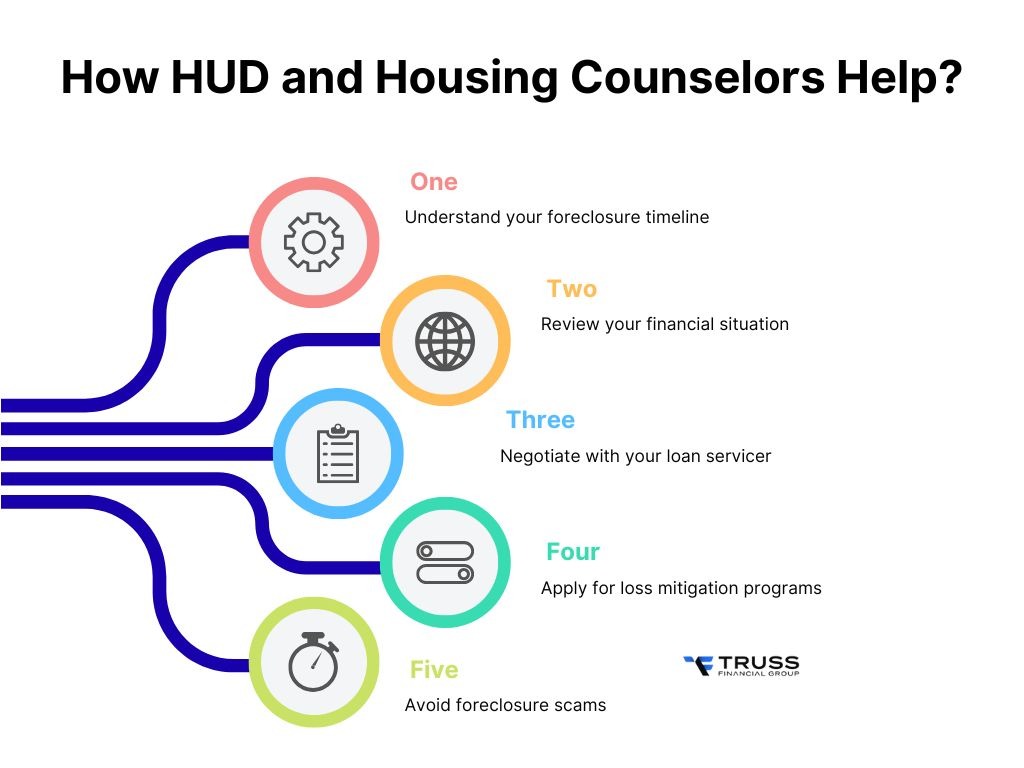
How HUD and Housing Counselors Help?
You don't have to figure this out alone. HUD-approved housing counselors provide free assistance to homeowners facing foreclosure.
These counselors help you:
- Understand your foreclosure timeline
- Review your financial situation
- Negotiate with your loan servicer
- Apply for loss mitigation programs
- Avoid foreclosure scams
To find a HUD-approved housing counselor, visit the Department of Housing and Urban Development website.
Federal law also protects you: lenders cannot start foreclosure while a complete loss mitigation application is pending, provided you submitted it at least 37 days before a scheduled sale date.
When Refinancing or Equity Can Save a Home?
If you have equity in your home, meaning it's worth more than you owe, refinancing or accessing that equity might save your house.
Here's how it works: let's say you owe $200,000, but your home is worth $280,000. You have $80,000 in equity. You could refinance your mortgage or take out a HELOC to access cash, pay off your past due payments, and get current on your loan.
This strategy works best if:
- Your financial hardship is resolved or improving
- You have enough equity to cover the past-due amount plus closing costs
- You can afford the new monthly payments
Foreclosure Scams to Avoid
When you're scared and desperate, scammers know it. Foreclosure scams are common, and they prey on homeowners in trouble.
Watch for these red flags:
- Anyone who "guarantees" they can stop foreclosure
- Upfront fees before any work is done
- Pressure to sign over your deed
- Requests for payments directly to them instead of your lender
- Claims that you should stop communicating with your mortgage company
Federal law prohibits companies from charging upfront fees for foreclosure assistance. Legitimate help doesn't cost money until results are delivered.
If someone contacts you promising to stop foreclosure for a fee, it's likely a scam. Instead, contact your lender directly or work with a HUD-approved counselor.
When Selling Is Better Than Losing the Home?
Sometimes the best move is to sell before foreclosure completes.
Short Sale
Your lender agrees to let you sell for less than you owe. You avoid foreclosure on your credit report, which means you can buy another home sooner. Lenders often prefer short sales because they recover more money than at a foreclosure auction.
Deed in Lieu of Foreclosure
You hand the keys to your lender voluntarily. They release you from the remaining debt. It's not as damaging as foreclosure, but it still affects your credit for several years. Some states allow a post-sale "right of redemption," but a deed in lieu ends everything immediately.
Both options require lender approval, but they're worth exploring if keeping the home isn't realistic.
What To Do If You're Facing Foreclosure Right Now?
If you're reading this because you're scared and don't know what to do next, here's your step-by-step survival checklist:
- Contact your loan servicer immediately - Ask about forbearance, repayment plans, or loan modification
- Reach out to a HUD-approved housing counselor - Free help reviewing your finances and options
- Do not ignore legal papers or notices - Every document has a deadline
- Review your finances and cut optional expenses - Prioritize your mortgage payment
- Explore whether you have equity - Refinancing or a HELOC might stop foreclosure
- Know your state's foreclosure timeline - Understanding how much time you have helps you plan
- Consider whether selling makes more sense - A short sale might protect your credit better than foreclosure
For UK readers: if you're facing mortgage arrears or repossession, this AI legal support can help you understand your options and prepare for a conversation with a solicitor (Not US legal advice, this is a parallel resource for people based in the UK that are in similar situations).
You Still Have Options to Stop Foreclosure
Foreclosure feels like the end, but it's not. Even if you're months behind, even if you've received legal papers, you still have choices. The worst thing you can do is nothing. The second worst thing is waiting.
Truss Financial Group offers no-obligation consultations for homeowners exploring refinancing or equity-based solutions. If you want to see what you qualify for, checking your eligibility doesn't impact your credit score.

Frequently Asked Questions
What is the process of foreclosure?
Foreclosure starts with missed payments, followed by a Notice of Default, legal filings or sale notices, a waiting period, and finally a public auction where the property is sold.
Do I still owe money if my house is foreclosed?
It depends on your state. Some states allow deficiency judgments, meaning you owe the difference between the sale price and your loan balance. Other states prohibit deficiency judgments.
Which is better, deed in lieu or short sale?
A short sale is generally better because you might receive relocation assistance and it's slightly less damaging to your credit. But if a short sale isn't possible, a deed in lieu is better than foreclosure.
How long after a deed in lieu of foreclosure can I buy a house?
Most conventional lenders require a 2 to 4-year waiting period. FHA loans may allow you to buy sooner, sometimes in 2 to 3 years, if you can document extenuating circumstances.
What are the three categories of foreclosure?
Judicial foreclosure (requires court), nonjudicial foreclosure (power of sale), and strict foreclosure (rare, where the lender takes title without a sale).
What is another term for deed in lieu of foreclosure?
It's sometimes called a "voluntary conveyance" or "mortgage release."
What do you mean by foreclosure?
Foreclosure is the legal process where a lender takes back a home because the borrower stopped making mortgage payments.
What is bad about buying a foreclosed home?
Foreclosed homes are often sold "as-is" with no repairs, may have title issues, and sometimes come with hidden damage from neglect or vandalism.
What is the purpose of the foreclosure?
Foreclosure allows the lender to recover the money they loaned by selling the property that served as collateral.
What happens if the property is foreclosed?
The homeowner loses ownership, the property is sold at auction, and the borrower's credit is severely damaged for seven years.
What is foreclosure in simple words?
Foreclosure is when your lender takes your house back because you couldn't pay the mortgage.
What is the downside of a foreclosure?
You lose your home, your credit score drops significantly, you might still owe money, and it becomes harder to rent or buy in the future.
Is it hard to get a mortgage on a foreclosure?
Buying a foreclosed home with a mortgage is possible, but lenders may require larger down payments and higher credit scores because these properties often need repairs.
How long can you live in your house without paying a mortgage?
It varies by state, but generally, it is 6 months to over a year. During this time, you're in default and facing foreclosure, but the legal process takes time.
What does it mean when a mortgage is foreclosed?
It means the lender is using legal proceedings to take back the property and sell it to recover their loan.
How many mortgage payments can I miss before foreclosure?
Most lenders begin foreclosure proceedings after you're 120 days delinquent, roughly four missed payments.

.svg)

Discuss your unique requirements
Get direct answers and a roadmap for your future.
.png?width=202&height=202&name=image%20588255187%20(1).png)

-3.png?width=389&height=221&name=Blog%20covers%20(2)-3.png)

%20(2).png?width=389&height=221&name=Blog%20covers%20(2)%20(2).png)


.svg)

.svg)
.svg)