.svg)



%20(1).svg)
%20(2).svg)
.png?width=480&height=420&name=Img%20(1).png)
%20(3).svg)
%20(4).svg)

%20(5).svg)


 View all states
What Is a Lien on a House? Types and How They Work

17 mins
In this blog
Key takeaways:
- A lien is a court or legal right tied to someone’s property. It is used when there is a debt that was not paid.
- You often see mortgage liens. You also see tax liens, mechanic’s liens, and judgment liens.
- Having a lien does not instantly move ownership. It also does not always mean the home will be taken right away.
- These liens can change loan options. They can affect refinancing and HELOC approval. They can also matter for who gets paid first. This can make it harder to sell a house.
- Even if you pay the amount owed, the record may not clear itself. You may need a formal release or a satisfaction paper. That paper often must be filed with the public office.
Learning that a lien was filed against your home can feel stressful. You may start to ask if you can still list the house for sale, get a new loan, or request a HELOC. If you are in the middle of buying a home, a lien found in the title search can bring up fresh issues too.
Not every lien means the owner is in serious trouble. A mortgage lien is common when homes are financed. Still, other liens might need more review, like tax liens, judgment liens, and mechanic’s liens.
What happens next often hinges on the lien type. It can also depend on the dollar amount, the lien priority, and the rules in your state. When you look at those facts, you can lower the odds of unexpected problems while you move forward with your home. Let’s talk.
What Is a Lien and What Is It Not?
A lien lets a creditor or another person with legal standing claim an interest in certain property tied to a debt or duty. In the real estate world, this usually involves a home, a condo, or a piece of land. A lien does not equal full ownership. It also does not always mean the property will be taken right away.
Take a mortgage as an example. When a borrower signs a mortgage, the lender typically gets a legal security interest in the home. The borrower still owns the home, pays the loan each month, and continues living there. The lender uses the lien to guard its money if the loan is not repaid.
So the difference matters. A loan is the promise and requirement to repay borrowed funds. A lien is the legal right that can back up that promise.
You may also see the word encumbrance. That term covers more than one kind of hold on property. It can point to a claim, a limit, or another interest that changes how owners can use or transfer their rights. A lien is one form of encumbrance.
If you are trying to figure out what is a lien and you saw a strange entry in your property records, start by finding where it came from. Was it linked to a mortgage, past-due taxes, a court ruling, or a contractor who did work? The answer can determine what happens next.
How Do Liens Work?
A lien starts with some kind of duty. You might see it with a mortgage. You might also see it with unpaid property taxes. Sometimes it comes from a debt tied to work done on a piece of real property. How the claim gets made depends on what kind it is. Some liens come from a deal between the owner and the creditor. Other liens come from a law or from what a court orders.
For real estate matters, filing can matter a lot. The lien may have to be entered with the right county office. That could be the recorder, the clerk, or a land records unit. The rules are not the same in every state. They also change based on the type of claim.
You may hear the word perfection. In plain terms, it means the steps required by law are done so the interest works against people who are not part of the original deal. Recording is one way to do that. It is not always the only way.
After a lien is recorded, it can show up in a title search. It can also show up in a lender’s review of public files. Still, that does not guarantee that every possible claim is found. There can be claims that are not recorded. There can be claims that do not show in a routine check.
A lien can end in different ways. It may be paid, settled, discharged, or made junior through subordination. It can be fixed through correction, or it can be resolved in another way allowed by law. A release or satisfaction paper may also need to be filed.
One point that helps: a lien is not the same as a levy. The IRS notes that a federal tax lien protects the government’s tax claim against a taxpayer’s property. A levy is a step used to take property so the tax debt can be paid.
The Main Ways Liens are Classified
Voluntary and Involuntary Liens
A voluntary lien is made only when the property owner agrees to it. A mortgage or a home equity loan is a typical case. An involuntary lien can show up even if the owner never agreed to give a security interest. Tax liens, judgment liens, and mechanic's liens may fit here, depending on local rules.
Specific and General Liens
A lien can also be tied to a specific asset. A mortgage on one named house is a good example. A general lien can extend to more of the debtor's property. What it covers still depends on the law and any exemptions that apply.
Senior and Junior Liens
Priority is another key point. “Senior” means it ranks ahead of “junior” in the payment order. When valid claims are paid from the sale or proceeds, the senior lien usually gets paid first. This comes up a lot when a homeowner has a first mortgage plus a second mortgage or a HELOC (Home Equity Line of Credit). These situations can overlap. For instance, a mortgage is often voluntary and specific. Still, its order depends on what other claims exist on the property.
Common Types of Property Liens
Mortgage and Home-Equity Liens
A mortgage lien is probably the type most people hear about. If you finance a home, the lender normally gets a security interest in the property. That interest is meant to back the promise to repay. People can also borrow against equity using a home equity loan or a HELOC. If there is already a first mortgage, the new loan is often set up as a second lien.
But the outcome is not always the same. Some HELOC deals end up as first-position liens. The lender's standards matter, along with any existing debt and the state of the property. Those factors decide what can be done.
This distinction matters because position changes risk. If a lender is looking at a HELOC, it may check the current first mortgage amount, the equity that is left, the combined loan-to-value, and whether the lien position you want is acceptable. Mortgage documents and foreclosure procedures can differ by state. Some states commonly use mortgages, while others use deeds of trust.
Property-Tax Liens
Unpaid property taxes can lead to a lien held by the local government. The effect of that lien depends on rules set by state and local law, including how it ranks against other claims and how it is enforced.
If you think a property-tax lien exists, double-check the payoff figure with the tax office that issued it. Also ask what options are available to make payments and how the office handles clearing the matter. Do not treat a paid balance as proof the public record is done. In many cases, a formal release or satisfaction step still has to be completed.
Federal Tax Liens
A federal tax lien can also happen in certain cases. It may begin when a person has a tax amount due, gets a request to pay, and does not pay. After that, the IRS can file a Notice of Federal Tax Lien so other creditors know about the IRS claim.
- Release: Ends the federal tax lien once the needed conditions are met.
- Discharge: Removes the lien from a specific piece of property when certain conditions apply.
- Subordination: Changes the order so another creditor can have priority, without always removing the federal tax lien.
- Withdrawal: May stop the public notice in certain situations, even if the tax still remains owed.
Mechanic's Liens
A mechanic’s lien is a claim that can be made for unpaid work or supplies used to improve real estate. Depending on the state, contractors, subcontractors, and vendors may be able to file one.
These cases often get tricky fast. The timing rules matter. Many states require a first notice. There are deadlines to file. After that, there are limits on when enforcement must start. Some states also have rules about when the lien starts to count.
If you see a mechanic’s lien, check the project it names. Look at who filed it. Then confirm that the filing steps and notice steps were done the way the law requires. A real-estate lawyer can review the facts and the paperwork.
Judgment Liens
A judgment lien can happen after a creditor wins a court case. Then the creditor must follow that state’s process to link the judgment to real estate. A court judgment does not automatically attach to all property in every state. Each state sets its own limits. Some states set how long the lien lasts. Others also set different exemptions. Enforcement steps can also change.
HOA and Condominium Liens
Homeowners’ associations and condo associations can sometimes place liens for unpaid dues and related fees. State rules are not the same. The notice steps can vary. The order of who gets paid first can differ. Foreclosure rights may also be different. Some states also have special statutory exceptions.
If an association lien shows up on your home, read the governing documents and the state law that applies to your situation. Do not assume it works the same way as a mortgage.

How Does Lien Priority Work?
Lien priority is the usual order in which courts or lenders pay approved claims from money made by a home sale or a foreclosure. Imagine a homeowner with a first mortgage, then later a HELOC. If the mortgage comes before the HELOC, the mortgage is typically paid first from what is left after the sale.
The order can change for several reasons. Property tax liens may rank differently. Some federal tax claims can also matter. Mechanic’s liens, certain homeowner association rules, and purchase-money interests can shift the outcome. Subordination agreements can further change who gets paid first.
Rules in a given state can add extra exceptions too. For a homeowner, the main issue is not only whether a lien exists. The key point is whether that lien ranks ahead of another claim, and what that means for a deal you plan to make. A title company or a lawyer can look at the recorded papers and the local rules. They can then identify the lien priority that applies.
A lien doesn’t always mean you have to give up on a HELOC. Truss Financial Group can help you understand how existing liens may affect your eligibility and what options may be available.
What a Lien Means for Selling, Refinancing, or Getting a HELOC
When a house changes hands, there are times when old liens must be paid off or handled in another way. That way, the buyer can get clear, usable title. A refinance can bring the same problem. The new lender may ask that certain liens be released or placed in a lower priority position before the loan is finalized.
Home equity deals can trigger it too. A lender who reviews a HELOC or a home equity loan may check things like these:
- The current mortgage balance.
- Existing home-equity loans or lines of credit.
- Other recorded liens.
- Available equity and combined loan-to-value.
- Whether the lender can obtain the required lien position.
Say there is an unpaid judgment lien. That type of lien may have to be handled before new financing is approved. In a different case, the lien gets settled during the closing itself.
What happens next depends on the lien details and on what the lender will accept. If your HELOC application was denied because of a lien, see Truss Financial Group's HELOC Declined Due to a Lien guide. You can also read Is a HELOC a Second Mortgage? to understand where a HELOC sits in your mortgage setup.
How to Check for Liens on a Property
Start by checking the public records tied to your home. Look at the county recorder’s site or office. You may also find files at the clerk or land records desk, depending on your area. There you can see items like mortgage filings, judgment liens, releases, and other related papers. For unpaid taxes, contact your local tax office and ask what they have on your parcel.
If you are buying, selling, or refinancing, ask the title firm for a preliminary title report or a title commitment. This is handled by the company working on your deal. That document can point out recorded claims and other title problems that show up in the chain.
When you look at a lien, focus on a few key points:
- The property owner's legal name and property description.
- The claimant or lienholder.
- The recording date and document number.
- The amount owed or payoff process.
- Whether a release or satisfaction has already been recorded.
Do not assume one quick search gives a full picture. Some matters may not be recorded yet, or they might not show up in the records you checked. A title company, a closing attorney, or a real estate attorney can tell you whether more checking is needed.
An existing lien may affect your financing, but it does not automatically rule out every option. Connect with Truss Financial Group to discuss your property, current liens, and potential next steps.
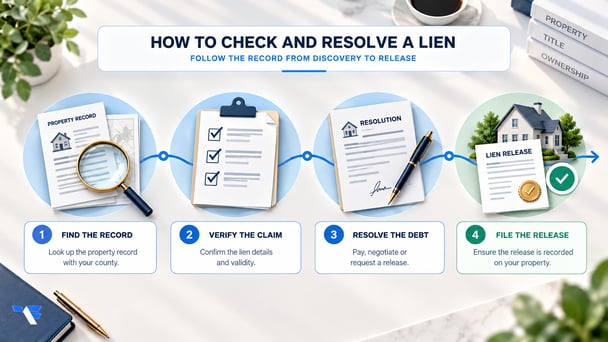
How to Remove or Resolve a Lien
No one method works to remove every lien. What you do next depends on what kind of lien it is, whether the claim is valid, and what facts led to it in the first place.
- Start with the debt itself. If the debt is real and you want the claim gone, you might need a written payoff quote from the lienholder. After you pay, do not assume it is done. Check what paper is expected, like a release or satisfaction, and ask if it gets filed in the land records.
- You can also look at a deal. If you settle, be sure the agreement spells out the money terms. It should also say what result you are getting and how the lien will be handled.
- If the lien is wrong, focus on fixing the record. You may need to reach out to the person who filed it or to the office that keeps the recordings. If you already paid the debt, or if the lien was filed on the wrong parcel, keep your proof. Save receipts, letters, and any other support for your side.
- Sometimes a lien can be moved down in priority, or it can be cleared as part of a deal. Those options do not equal a simple payoff.
- For mortgage payoff steps, the loan servicer or settlement agent usually works on the satisfaction or reconveyance. State rules still control the process. The timing and filing steps can differ by location.
- When it is over, keep everything. Save payment notes, payoff letters, settlement papers, and copies of any recorded release. If someone disputes the lien’s standing, its priority, or whether it can be enforced, talk to a qualified real estate lawyer.
Does a Lien Affect Your Credit?
A property lien does not always lead to a lower credit score. In the past, some items could show up in credit files. Now, tax liens and civil judgments are not listed in the three main consumer credit reports kept by Equifax, Experian, and TransUnion. Even so, the unpaid amount tied to a lien can still hurt you. It can show up later if there are missed payments, debt collection, or other actions that get reported.
There is also a second point to keep in mind. A lien might not show up on a usual credit report. It can still be found in other ways. For example, a title search, a check of public records, or a lender review during underwriting may reveal it.
So if you are applying for a mortgage or a HELOC, do not trust a clean credit report as proof that the property has no lien issues.
Frequently Asked Questions
What is a lien on a house?
A lien on a house is a legal claim or security interest connected to an obligation. It may affect a sale, refinance, or new loan, but it does not automatically transfer ownership.
Is a mortgage a lien, and is a mortgage lien bad?
Yes. A mortgage is generally a voluntary lien that secures repayment of a home loan. It is a normal part of buying a home with financing.
What is the difference between a lien and a loan?
A loan is an obligation to repay borrowed money. A lien is the legal interest in property that may secure repayment. The two are connected but not identical.
Can someone place a lien on a home without the owner knowing?
Some liens can arise without the owner's voluntary agreement, including certain tax, judgment, or mechanic's liens. Notice requirements depend on the type of lien and state law.
Can a home be sold or refinanced when a lien exists?
Sometimes. The lien may need to be paid, released, subordinated, disputed, or otherwise addressed before the transaction can close.
Can a lienholder take the house?
A lienholder does not automatically become the owner. Certain lienholders may have enforcement or foreclosure rights if the applicable legal requirements are met.
Does a property lien hurt a credit score?
Not necessarily. A lien may be absent from a standard credit report, while missed payments or other debt-related activity may affect your credit. Lenders can still discover liens through title review.
How can a homeowner find out what type of lien is recorded?
Review the recorded document through the relevant county land-record office or ask a title company to examine the title. The document should help identify the claimant and nature of the lien.
Does paying the debt automatically remove the lien?
Not always. Payment may satisfy the debt, but a release, satisfaction, withdrawal, or another document may need to be recorded.
How long does a lien release take?
The timeline depends on the lienholder, recording office, document requirements, and state law. Ask for the expected process and confirm that the release has been recorded.
Final Thoughts
A lien on a house is not always an emergency. It is a court-backed claim tied to a debt. How serious it feels depends on what kind of lien it is. It also depends on its order of priority and on what must be done to clear it.
If you plan to sell, refinance, or get a HELOC, it helps to look at title matters sooner. Early review can make it easier to meet what a lender will ask for.
Truss Financial Group can help you look at the funding side. You can also review how existing liens may change a home equity borrowing request. If you need answers on whether a lien is valid, how it is enforced, or how to fix it legally, speak with a qualified real estate attorney.

.svg)

Discuss your unique requirements
Get direct answers and a roadmap for your future.
.png?width=202&height=202&name=image%20588255187%20(1).png)

.png?width=389&height=221&name=Blog%20covers%20(22).png)

-1.png?width=389&height=221&name=Blog%20covers%20(7)-1.png)





.svg)

.svg)
.svg)