

 View all states
How to Build a Real Estate Portfolio: Beginner’s Guide

11 mins

In this blog
- Make sure your first rental has solid cash flow, reserves, and an exit strategy.
- Use conservative assumptions for vacancy, repairs, management, and debt before comparing loan products.
- There are several types of loans for real estate investment, including DSCR, conventional, bank statement, HELOC, and bridge loans. Choose the one that fits your personal circumstances, the property, and your available funds.
- When adding properties, make sure you have enough rental income, reserves, and borrowing power. Building a real estate portfolio takes time, so every purchase should fit with the others.
- Review your rental property portfolio regularly, and speak to Truss Financial Group about your investor financing options.
Learning how to build a real estate portfolio is a repeatable process. You will likely start with one rental property, but as you add to your portfolio, each rental should have solid numbers behind it and fit within your overall borrowing power. Whether you are buying your first property or your tenth, a planned, financed, and tracked real estate investment portfolio gives you the best results.
Many first-time rental investors find it difficult to locate a property. The harder part is usually choosing the correct loan, keeping enough cash in reserves, and knowing when to buy your next property. Truss Financial Group, a U.S. mortgage lender and broker, can help you compare your options.
What Is a Real Estate Portfolio?
A real estate portfolio is a collection of properties or investments that you own. You can start with just one investment. Many people think of a real estate portfolio as a group of residential properties that generate rental income. Each property generates monthly rent and builds equity as you pay down the principal and the property increases in value.
Some investors also hold passive investments such as real estate investment trusts (REITs), which pool money invested in commercial and residential properties. This guide focuses on residential rental properties, since most first-time investors start there. To understand how to build a rental property portfolio, it helps to be clear about what you are trying to build.
How to Build a Real Estate Portfolio: Step-by-Step Guide
Step 1: Set Your Goals and Work Out Your Budget
Before looking at properties, decide what you want your real estate portfolio to achieve. Consider the income you need, how long you plan to hold each property, and how much time you can spend managing it. These answers will help you choose the right strategy.
If you want monthly cash flow to supplement your salary, you will need different properties than someone aiming for long-term appreciation. Clear goals will help you decide how to build your real estate portfolio around your lifestyle. Most first-time investors also want to know how to build a rental property portfolio without overstretching themselves, and a clear budget is the best starting point.
Make sure you have a clear budget for your down payment, closing costs, initial repairs, and cash reserves. Vacancies, repairs, and rate changes happen even in a good market, so budget carefully. A mortgage calculator can help you estimate your monthly payment. Some investors also consider house hacking, which means living in one unit of a multi-unit property and renting out the others. This only applies if you genuinely live in the property, and occupancy rules will also affect which loans you can get.
Step 2: Choose a Market and Check the Property Numbers
Research the demand for rental properties in your local area. Look at comparable rental rates, vacancy rates, employment, schools, and transport links. Also review local rules on leasing, rent increases, and short-term rentals. The property's condition, insurance, and property taxes will affect the outcome. Choosing the right market and making sure each property has the right numbers will help your real estate portfolio withstand pressure. Every property in your portfolio should pass the same checks.
Before making an offer, run the numbers. Here is an example. Suppose a single-family rental property is valued at $300,000 and rents for $2,800 per month.
- Vacancy: 5% of gross rental income
- Management fees: 8% of rental income collected
- Repairs and capital reserves: $3,000 per year
- Property tax and insurance: $6,000 per year
- Loan: $240,000 at 7% over 30 years
Gross rental income is $33,600 per year. After a 5% vacancy allowance of $1,680, effective rental income is $31,920. Operating expenses total $11,554: management fees of $2,554, repairs and capital reserves of $3,000, and property tax and insurance of $6,000. Net operating income (NOI), the income left after operating expenses but before debt payments, is $20,366. Dividing NOI by the purchase price gives a cap rate of 6.8%.
Debt service is roughly $19,162 per year, which leaves about $1,200 per year before tax, or roughly $100 per month. On a cash investment of $80,000, cash-on-cash return (annual cash flow divided by cash invested) is about 1.5%. As you can see, margins can be tight. Even if a loan passes with one lender, your household budget depends on how much you have left after all expenses. To see how much rental coverage your property has, try our DSCR calculator.
Step 3: Choose Financing That Fits the Property and Your Income
The success of your real estate portfolio often depends on your choice of loan. Each loan assesses your borrowing power differently, so choose the one that fits your property and circumstances. Most real estate investment portfolios use a combination of loans.
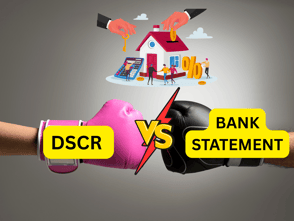
| Loan Type | Best Suited For | Key Considerations |
|---|---|---|
| Conventional investment property loan | High personal income, tax returns, and a strong credit history | Income, debts, credit, deposits, and reserves are considered |
| DSCR loan | Investors who qualify based on rental income | Credit, equity, and reserves are still considered |
| Bank statement loan | Self-employed borrowers with documented income | Must fit the borrower, occupancy, and property |
| Investor HELOC | Property owners with equity who want to borrow against it | Flexible repayments, but it is secured against your home and adds new debt |
| Bridge loan | Short-term purchases or renovations | Needs a clear exit strategy to cover carrying costs; the refinance or sale must be viable |
With residential DSCR loans, lenders typically compare rental income against principal, interest, taxes, insurance, and association fees. For commercial properties, lenders use net operating income and debt service. Confirm which method your loan uses. Fannie Mae's Selling Guide explains how financed properties and rental income are treated.
Truss Financial Group can help you compare options that fit your property, income, and next purchase. Speak to Truss about your investor financing options or get a quote.
Step 4: Buy the Property and Establish Reliable Operations
Once you have purchased your property, get operations moving. Order inspections, check the title and insurance, and confirm that rental income, taxes, and insurance match your forecasts. Make sure the property is ready to rent by checking repairs, safety items, and utilities. Confirm that your rent is in line with current comparable listings.
A good operating process is essential, and it is often where a real estate portfolio succeeds or fails. Use a consistent tenant screening process, written leases, and a traceable method for collecting rent. Keep separate records for each property. Decide whether you will manage the property yourself or hire a property manager, depending on the cost and the time you have. Discuss ownership structure and tax considerations with a qualified CPA or attorney. For rental income and deductions, the IRS publishes Publication 527, which is an authoritative reference.
Step 5: Decide When You Are Ready for the Next Property
Before buying another property, have evidence to support the decision. Review the rental income you have received, your actual costs over several months, how much you have saved in reserves, and your borrowing power. Knowing when to buy again is part of building a real estate portfolio for the long term, and so is knowing when your borrowing power has grown enough to support it.
To grow your real estate investment portfolio as quickly as possible, you can choose between two options. You can reinvest excess cash flow, which is slower but adds no new debt. Or you can use eligible equity through an investor HELOC or a cash-out refinance. How much equity you have depends on your property's value, your existing debt, the loan-to-value (LTV) ratio your lender allows, and closing costs. HELOCs are secured against your home and can have flexible repayments. Make sure you understand how they work and the risks involved.
Some investors use the BRRRR method (Buy, Rehab, Rent, Refinance, Repeat). This approach depends on your refinance appraising high enough to return a large portion of your invested cash, but the refinance can be delayed or denied. Before starting, plan an exit strategy. It might involve holding the property as a rental, selling it, or keeping reserves to cover the loan while you wait. A disciplined approach protects your real estate portfolio.
Step 6: Track the Portfolio and Adjust Your Strategy
Once you own a few properties, keep a simple tracker. Record rental income, days vacant, operating costs, debt, monthly cash flow, reserves, and estimated equity, both per property and for the portfolio as a whole. Review your results every quarter. Tracking helps you see which assets drive your returns and where your risks are.
Risks can include overexposure to one market or property type, aging roofs and systems that will need capital, variable rates that reset, and refinancing dates in a difficult lending environment. Your review should also tell you when to improve your processes, pause purchases, or consider selling. A large real estate portfolio is not necessarily a healthy one, so review each property and understand its risks.
Plan Your Next Investment With Truss Financial Group
Patience pays off when building a portfolio. Start with a property whose numbers you understand, and finance it with the loan that suits your income and goals. Buy another property only when you have enough rental income, reserves, and borrowing power. Every step of building your real estate portfolio depends on clear numbers and a clear financing plan, which makes the portfolio easier to finance and manage.
Truss can help you compare conventional, DSCR, bank statement, and HELOC loans. Bring your property details, rental income, existing loans, and available cash. Speak to us about your investor financing options to find the structure that will work for your next purchase. Ready to get started? Get a quote today.
FAQs: How to Build a Real Estate Portfolio
How much money do I need to start, and can I begin with limited cash?
Have a budget in place for your deposit, closing costs, initial repairs, and cash reserves. Some people start with little cash, but the lower your deposit, the higher your monthly costs will be, and the less room you have for error. To learn how to build a rental property portfolio with limited cash, start with a realistic budget. Review our DSCR deposit considerations.
Can rental income help me qualify for another mortgage?
Sometimes. DSCR loans qualify you based on the rental income from the property. Conventional loans typically look at your personal income, debts, and tax returns. If the rental income from your real estate portfolio is documented and stable, it can help with future financing. Find out more about DSCR loans for rental purchases.
How many rental properties can I finance?
That depends on the loan, your reserves, your debts, and how each property qualifies. Conventional loans follow guidelines in the Fannie Mae Selling Guide on how many financed properties a borrower can hold, and other loans have their own rules. Speak to TFG about your investor financing options.
Can I use a HELOC to buy another rental property?
Possibly. A HELOC is secured against your home and typically has variable repayments. It increases your overall debt. Compare your investor HELOC options and their risks.
Is a real estate portfolio the same as a portfolio loan?
No. A real estate portfolio is a collection of properties you own or invest in. A portfolio loan is a single mortgage that finances multiple properties. Truss can explain which applies to your holdings.
Can I finance a rental property owned by an LLC?
Some lenders and loans allow properties to be owned by an LLC. Requirements vary and may include documentation for setting up the LLC and an operating agreement. Ask about financing LLC-owned rentals early in your planning.
How do I know whether I am ready to buy the next rental?
Look at your actual cash flow over several months, how much you have saved in reserves, and your borrowing power under the loans you could use. Knowing when you are ready for your next rental is part of building a real estate portfolio for the long term. If any of these areas are weak, improve them first. Speak to TFG about your investor financing options to review your numbers.
Share this article:


Discuss your unique requirements
Get direct answers and a roadmap for your future.